The Ultimate Toyota Guide: Smart Buying, Model Comparisons, and Long-Term Ownership
Affiliate Disclosure: As an Amazon Associate, we earn from qualifying purchases at no extra cost to you.
Toyota stands as the global benchmark for automotive durability, resale value, and hybrid powertrain efficiency. Whether you are shopping for a fuel-sipping commuter or maintaining a high-mileage truck, choosing the right trim and following strict fluid intervals maximizes your investment.
- Best All-Around Crossover: Toyota RAV4 Hybrid for unmatched fuel economy and cargo utility.
- Best Daily Sedan: Toyota Camry for low running costs and standard hybrid power.
- Best Off-Road & Utility: Toyota Tacoma and 4Runner for body-on-frame toughness.
- Golden Maintenance Rule: Change synthetic motor oil every 5,000 miles rather than 10,000 miles to prevent piston ring wear.
Buying or maintaining a vehicle should never feel like a gamble. Toyota built its reputation on conservative engineering, proven powertrains, and parts availability that keeps repair bills predictable for decades.
This guide gives you exact strategies to select the right model, inspect used inventory like a master technician, and maintain your vehicle past 250,000 miles.

Why Toyota Dominates Modern Reliability and Value
Unlike automakers that rush untested electronics to market, Toyota relies on incremental refinement and the Toyota New Global Architecture (TNGA). Sharing platforms across models improves structural rigidity while keeping replacement parts affordable and widely stocked.
Toyota’s Hybrid Synergy Drive also eliminates traditional wear items like starter motors, alternators, and conventional clutch packs. The planetary gearset eCVT transfers power smoothly, often outlasting standard automatic transmissions under heavy city driving.
Pro Tip: Toyota hybrid batteries typically last 10 to 15 years. Keep the rear seat hybrid cooling fan filter clean every 15,000 miles to prevent battery overheating.
Core Toyota Lineup Breakdown by Driver Need
Commuters and Families: Corolla, Camry, and Sienna
The Toyota Corolla remains the smartest entry point for budget-focused commuters seeking low insurance rates and simple mechanics. Step up to the Toyota Camry if you want midsize legroom, quieter highway manners, and standard hybrid efficiency.
For growing families, the hybrid-only Toyota Sienna delivers minivan practicality with available all-wheel drive and exceptional fuel economy.
Crossovers and SUVs: RAV4 and Highlander
The Toyota RAV4 balances compact exterior dimensions with generous cargo capacity and strong ground clearance. Opt for the RAV4 Hybrid over the standard gas model for quicker acceleration and quieter cabin performance.
If you need three rows of seating without truck-like handling, the Toyota Highlander and Grand Highlander provide smooth unibody ride quality and robust towing capability.
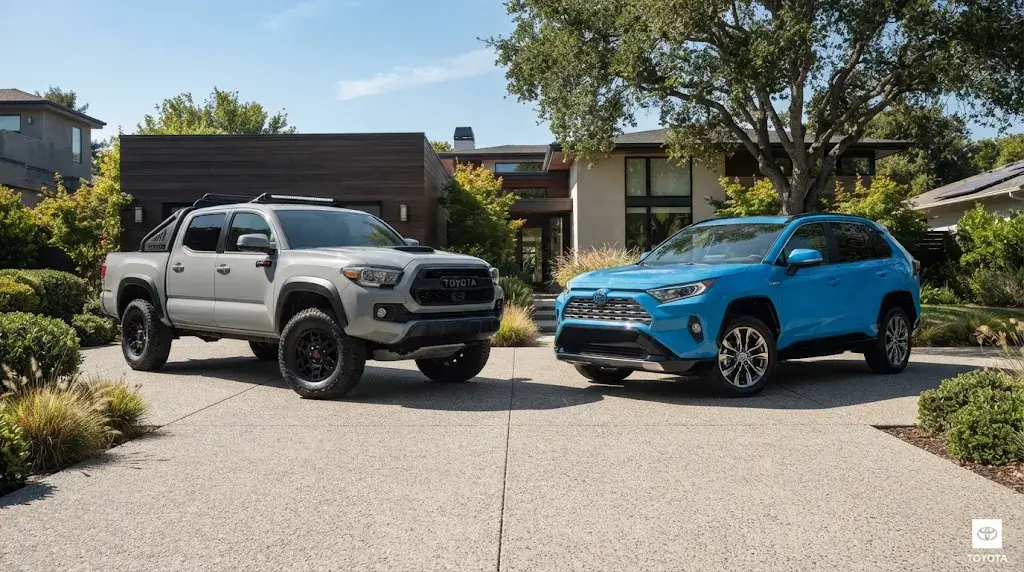
Trucks and Off-Road Icons: Tacoma, 4Runner, and Tundra
The Toyota Tacoma and Toyota 4Runner use rugged body-on-frame construction built to survive rocky trails and harsh winters. Both models hold the highest resale values in the automotive industry.
For full-size hauling, the Toyota Tundra pairs twin-turbo V6 power with coil-spring rear suspension for superior towing stability.
Step-by-Step Guide to Buying a New or Used Toyota
High demand means Toyotas rarely sit on dealer lots for long. Follow these four steps to secure a fair deal and avoid hidden mechanical headaches.
- Verify the VIN History: Run the Vehicle Identification Number through the free Toyota Owners portal to view official dealership service records.
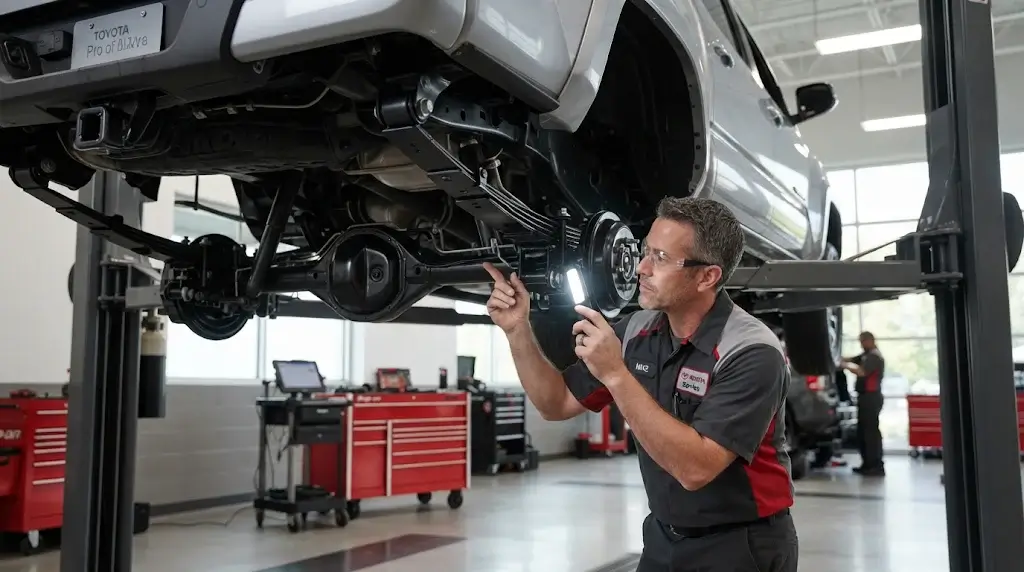
- Inspect the Undercarriage for Rust: Check frame rails, weld seams, and suspension mounts on used Tacoma, 4Runner, and Tundra trucks from snowy regions.
- Request Out-the-Door Pricing: Negotiate the final total price including taxes and fees rather than monthly payments, and decline overpriced dealer paint sealants.
- Book a Pre-Purchase Inspection (PPI): Pay an independent mechanic to scan all onboard modules and check compression before signing used-car paperwork.
Top Toyota Models Comparison Table
Compare Toyota’s most popular vehicles side by side to match powertrain architecture and utility to your daily driving needs.
| Model | Category | Powertrain Options | Best For |
|---|---|---|---|
| Toyota Corolla | Compact Sedan / Hatchback | 2.0L Gas or 1.8L Hybrid | Budget commuting and first-time buyers |
| Toyota Camry | Midsize Sedan | 2.5L Hybrid (FWD or AWD) | Long highway commutes and comfort |
| Toyota RAV4 | Compact SUV | 2.5L Gas, Hybrid, or Plug-In Hybrid | All-weather versatility and small families |
| Toyota Highlander | 3-Row Midsize SUV | 2.4L Turbo Gas or 2.5L Hybrid | Growing families needing 7–8 seats |
| Toyota Tacoma | Midsize Pickup Truck | 2.4L Turbo or i-FORCE MAX Hybrid | Off-road trails, hauling, and resale value |
Essential Maintenance Rules for 300,000-Mile Longevity
Toyotas forgive minor neglect better than most brands, yet strict preventive maintenance separates a 150,000-mile car from a 300,000-mile legend.
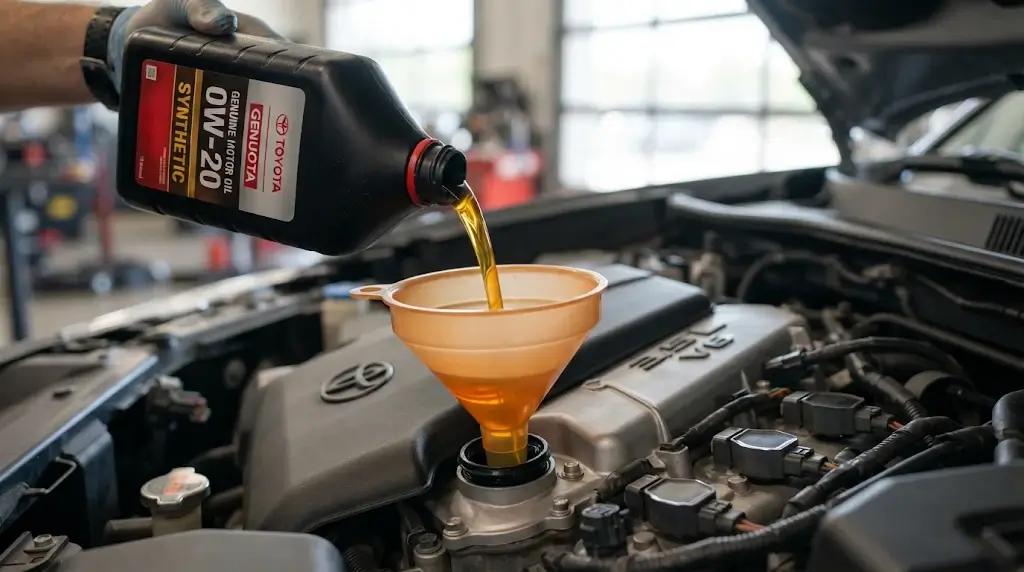
- 5,000-Mile Oil Changes: Use full synthetic oil (such as 0W-20 or 0W-16 per your oil cap) and OEM Toyota filters every 5,000 miles or six months.
- 60,000-Mile Transmission Service: Ignore “lifetime fluid” claims and perform a drain-and-fill with genuine Toyota WS ATF every 60,000 miles.
- Cooling System Flushes: Replace Toyota Super Long Life Coolant (pink) at 100,000 miles, then every 50,000 miles afterward to protect water pumps and head gaskets.
- 4WD Drivetrain Fluids: Change front differential, rear differential, and transfer case gear oil every 30,000 miles on AWD and 4×4 models.
Common Toyota Buying and Ownership Mistakes to Avoid
- Skipping Frame Rust Prevention: Road salt destroys unprotected truck frames. Apply a lanolin-based undercoating like Fluid Film every autumn.
- Using Aftermarket Ignition Parts: Toyotas are sensitive to aftermarket sensors and spark plugs. Always buy genuine Denso or NGK OEM ignition components.
- Overpaying for Dealer Add-Ons: Never pay markups for nitrogen tires, VIN etching, or third-party extended warranties on a reliable Toyota powertrain.
- Neglecting Brake Slide Pins: Because Toyota hybrids use regenerative braking, physical brake pads last longer, causing caliper slide pins to seize if not lubricated annually.
Best Tools and Gear for Every Toyota Owner
Keeping four proven tools in your garage or trunk saves hundreds of dollars in diagnostic fees and roadside emergencies.
1. BlueDriver Bluetooth Pro OBD2 Scan Tool
Basic code readers only pull generic engine faults, whereas the BlueDriver reads Toyota-specific ABS, airbag, and transmission modules straight from your smartphone. It pairs trouble codes with verified mechanic repair reports and requires zero monthly subscription fees.
Standout Feature: Enhanced Toyota OEM module diagnostics with live sensor data graphing.
BlueDriver Bluetooth Pro OBD2 Scan Tool (Check Price on Amazon)
2. NOCO Boost Plus GB40 1000A Lithium Jump Starter
Hybrid and modern push-button Toyotas rely on a small 12-volt auxiliary battery that can die unexpectedly in extreme cold. The compact NOCO GB40 delivers 1,000 amps with spark-proof clamps so you can jump-start your vehicle safely without waiting for roadside assistance.
Standout Feature: UltraSafe reverse-polarity protection and up to 20 jump starts per charge.
NOCO Boost Plus GB40 1000A Lithium Jump Starter (Check Price on Amazon)
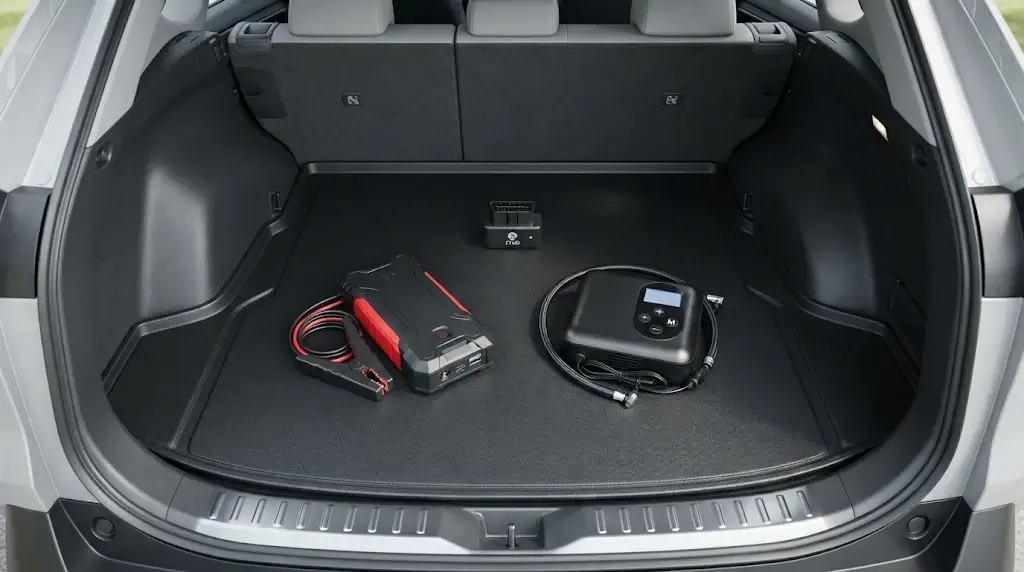
3. EPAuto 12V DC Portable Air Compressor Pump
Maintaining proper tire pressure protects Toyota AWD differentials from uneven tire wear and preserves peak hybrid fuel economy. Plug this inflator into your 12V outlet, set your target PSI on the digital screen, and let the auto-shutoff valve handle the rest.
Standout Feature: Programmable digital pressure gauge with automatic shutoff and LED work light.
EPAuto 12V DC Portable Air Compressor Pump (Check Price on Amazon)
Recommended Next Reads
- Toyota RAV4 Hybrid vs. Gas: Complete 10-Year Ownership Cost Breakdown
- Best Used Toyota Models Under $15,000 That Easily Cross 250,000 Miles
- Toyota Tacoma Maintenance Schedule: Every Fluid and Filter Interval Explained
- How to Inspect a Used Toyota 4Runner Frame Before You Buy
Authoritative Automotive Resources
- NHTSA Safety Ratings & VIN Recall Lookup — Check official federal crash test scores and open safety recalls.
- U.S. Department of Energy Fuel Economy Guide — Compare verified EPA MPG ratings across Toyota gas and hybrid models.
- Insurance Institute for Highway Safety (IIHS) — Review detailed collision safety and headlight evaluations.

Final Takeaway
Choosing a Toyota means investing in proven engineering that rewards disciplined maintenance with decades of dependable driving. Buy the model that fits your real daily routine, verify its service history, and stick to strict fluid intervals to enjoy unmatched peace of mind on every mile.
Frequently Asked Questions
How many miles do Toyota vehicles typically last?
With consistent 5,000-mile synthetic oil changes and regular transmission and coolant services, most Toyota sedans, SUVs, and trucks reliably reach 200,000 to 300,000 miles. Models like the Land Cruiser, 4Runner, Tacoma, and Camry frequently exceed 300,000 miles on their original engine and transmission.
Are Toyota hybrids more expensive to maintain than gas models?
No, Toyota hybrids actually cost less to maintain over time. Regenerative braking doubles brake pad life, while the eCVT transmission eliminates traditional clutch packs, starter motors, and drive belts. Aside from cleaning the hybrid battery cooling filter, routine fluid changes mirror standard gas models.
Should I change my Toyota’s oil every 5,000 or 10,000 miles?
Master Toyota technicians strongly recommend changing full synthetic oil every 5,000 miles or six months. Most drivers fall under Toyota’s “special operating conditions” due to short trips, stop-and-go traffic, or extreme temperatures, which cause oil dilution and premature piston ring wear if stretched to 10,000 miles.
Which used Toyota models hold their value best?
The Toyota Tacoma, 4Runner, Tundra, and RAV4 Hybrid consistently rank at the top of automotive resale value charts. Because depreciation is remarkably slow on these models, buying new or lightly used with documented dealership maintenance records often delivers better long-term value than high-mileage used purchases.