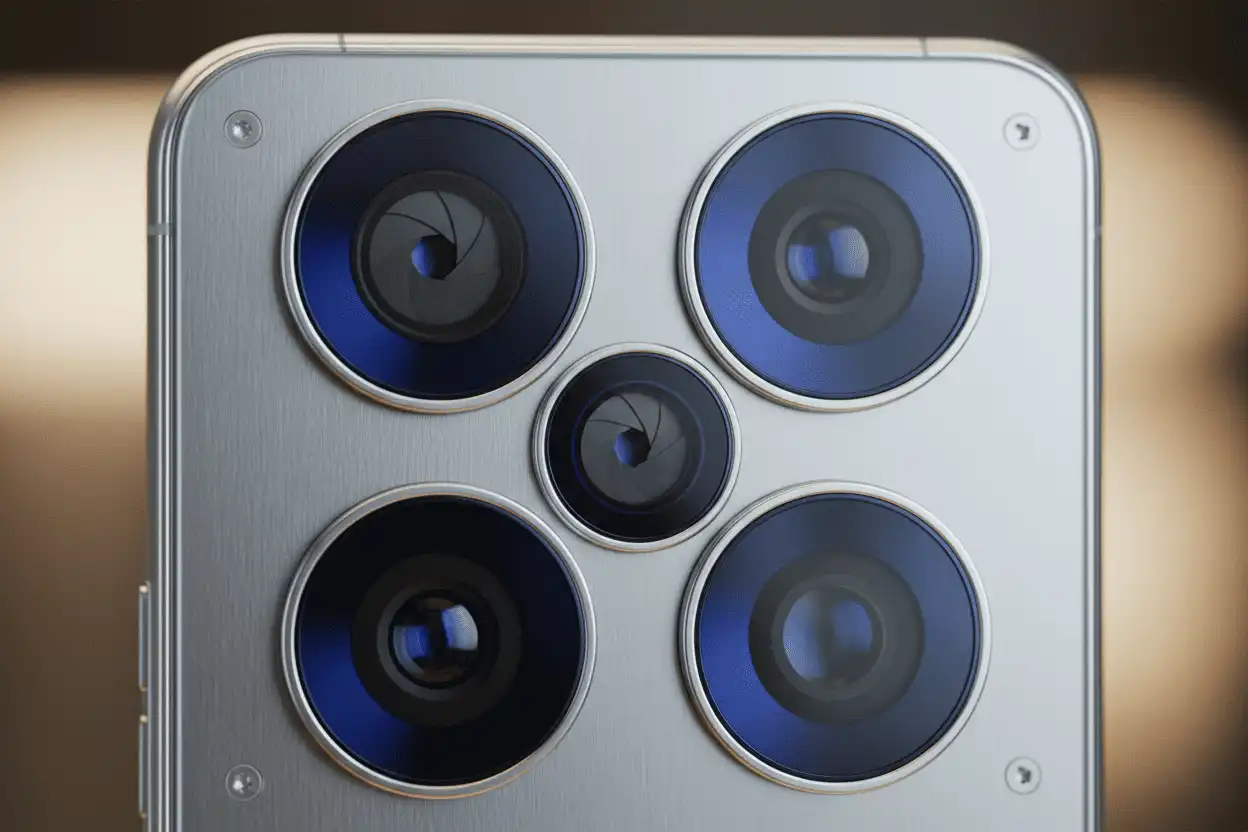
The iPhone 18 generation establishes a major shift in Apple’s product release cadence and system architecture. The flagship iPhone 18 Pro and iPhone 18 Pro Max arrive in September 2026, introducing TSMC’s 2nm A20 Pro silicon alongside a mechanical variable aperture camera. The base iPhone 18 follows on a bifurcated schedule in Spring 2027.
Engineered around high-density memory arrays and custom thermal vapor chambers, these models run sophisticated on-device neural workloads locally. This hardware stack handles heavy computational photography and autonomous system operations without relying continuously on remote servers.
- September 2026 Launch: iPhone 18 Pro and iPhone 18 Pro Max available immediately.
- Spring 2027 Launch: Standard iPhone 18 arrives alongside secondary form-factor variations.
- Core Innovations: 2nm A20 Pro SoC, 12GB unified RAM, mechanical f/1.4–f/2.4 variable aperture, and internal vapor chamber cooling.
Smartphone upgrades represent major long-term hardware investments. Making an informed choice requires clear insight into silicon packaging, camera optics, and long-term operating support.
This technical guide serves power users, mobile creators, enterprise administrators, and buyers navigating an upgrade from older generations. It breaks down every subsystem, benchmark expectation, and migration pitfall across the entire hardware series.
Staggered Release Strategy: Pro in 2026 vs. Standard in 2027
Apple has restructured its historic release roadmap into a multi-phase hardware rollout. Instead of releasing the entire family in late autumn, the company has separated flagship Pro hardware from mainstream consumer units.
The September 2026 event focuses exclusively on professional workflows with the iPhone 18 Pro and iPhone 18 Pro Max. This cadence caters immediately to creators, power users, and early adopters who demand cutting-edge performance.
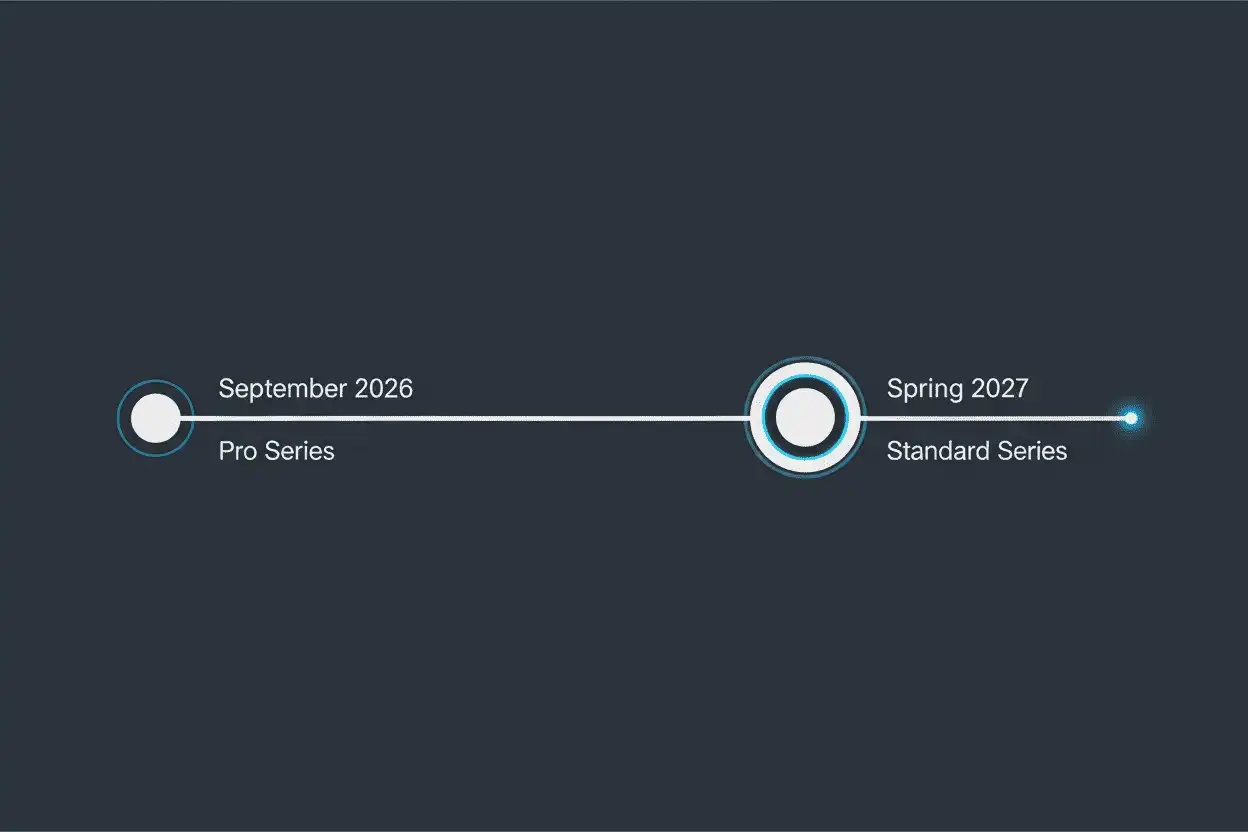
The standard iPhone 18 debuts in Spring 2027 alongside refreshed companion devices. This schedule shifts production pressure away from peak holiday manufacturing windows. It also provides mainstream shoppers with a dedicated launch cycle focused on affordability and core features.
Market Segmentation and Buyer Considerations
This phased schedule changes purchasing decisions for buyers weighing price against performance. Those holding an aging device must decide whether to invest in the Pro models now or wait for the base unit.
If your daily usage relies on high-resolution capture and intensive multitasking, the Pro tier justifies immediate adoption. Everyday users who browse, message, and stream can comfortably wait for the Spring 2027 standard release.
Silicon Engineering: The 2nm A20 Pro and Memory Subsystem
The A20 Pro system-on-chip (SoC) marks the smartphone industry’s commercial transition to TSMC’s 2-nanometer (N2) fabrication process. This leap replaces traditional FinFET structures with nanosheet Gate-All-Around (GAA) field-effect transistors.
Nanosheet technology reduces parasitic sub-surface power leakage while optimizing drive currents across the die. The design delivers roughly 15% faster compute speeds alongside a 30% reduction in power consumption under equivalent workloads.
12GB Unified Memory and Wafer-Level Packaging
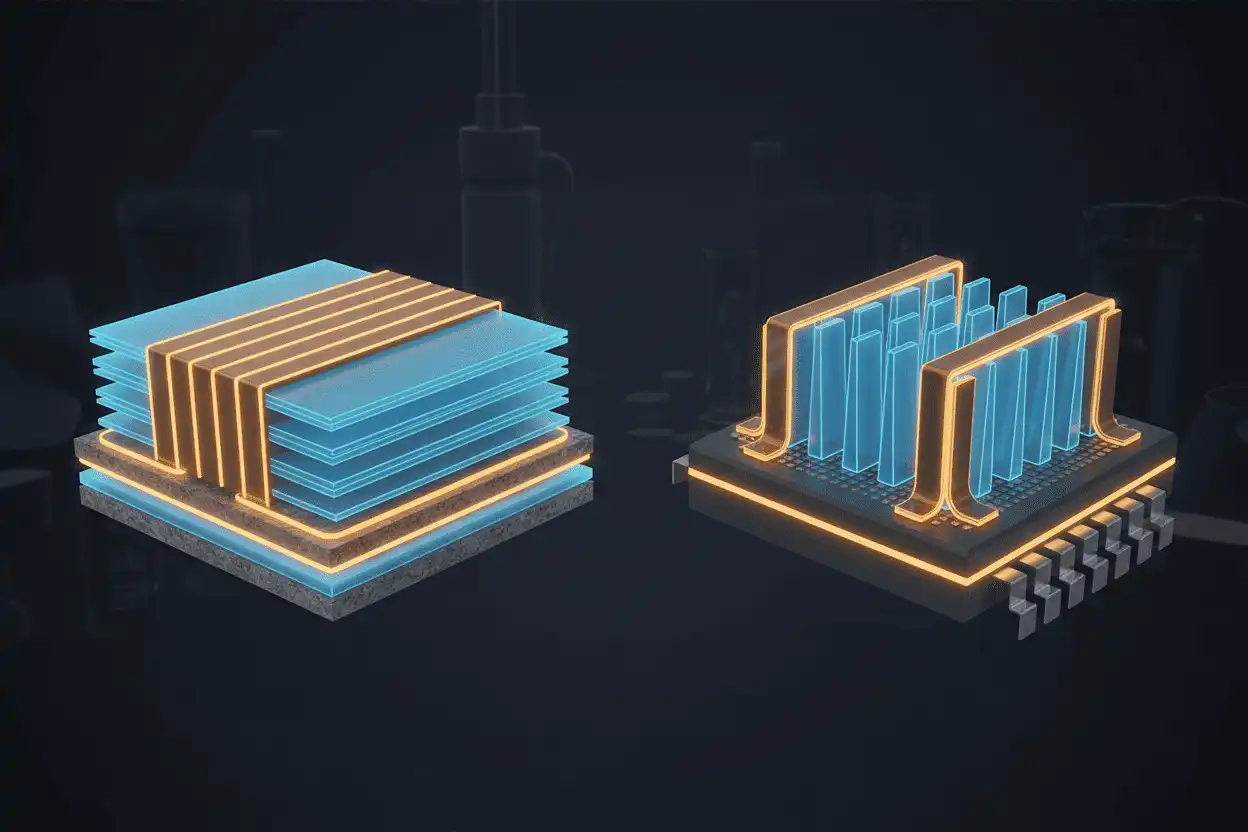
High-capacity on-device machine learning models require substantial memory bandwidth. The A20 Pro pairs with 12GB of high-speed LPDDR5X unified memory across all Pro configurations.
Apple uses Wafer-Level Multi-Chip Module (WMCM) packaging to bind the DRAM closer to the application processor. This layout cuts inter-die latency and provides the 16-core Neural Engine with sustained access to local memory caches.
Thermal Dissipation and Vapor Chamber Engineering
Sustaining peak compute performance requires effective thermal management. Past designs relied purely on graphite sheets and structural titanium transfer points to dissipate heat.
The iPhone 18 Pro integrates a laser-welded copper and titanium vapor chamber that covers the SoC and primary power regulators. This system wicks heat away from localized hotspots, preventing the thermal throttling that previously limited sustained gaming or extended ProRes recording.
Optical Innovations: Variable Aperture and 48MP Imaging
Smartphone cameras have historically relied on fixed-aperture lenses. Fixed optics force the image signal processor to manage exposure almost entirely through shutter speed and digital sensor gain.
The iPhone 18 Pro main camera introduces a physical, micro-stepped variable aperture. A precision electro-mechanical actuator adjusts internal blades between f/1.4 and f/2.4 based on shooting conditions.

Optical Benefits: Depth Control and Diffraction Mitigation
At f/1.4, the optical system gathers maximum light for nighttime cityscapes, interior portraits, and astrophotography. It produces natural optical bokeh with authentic physical roll-off instead of artificial software blur.
When you stop down to f/2.4 in bright outdoor sunlight, the lens sharpens edge-to-edge landscape details. Closing the aperture also prevents highlight clipping and optical diffraction across the 48-megapixel sensor surface.
Upgraded Sensor Integration Across All Focal Lengths
The secondary optical systems receive matched sensor architectures. The ultra-wide and 5x tetraprism telephoto lenses both rely on stacked 48-megapixel sensors designed for low-noise readout.
Creators can record 4K 120fps video in 10-bit Log directly to connected USB-C storage drives. Matching color primaries and dynamic range across all three rear cameras eliminates color shifting during active lens transitions.
Display Evolution and Structural Thermal Design
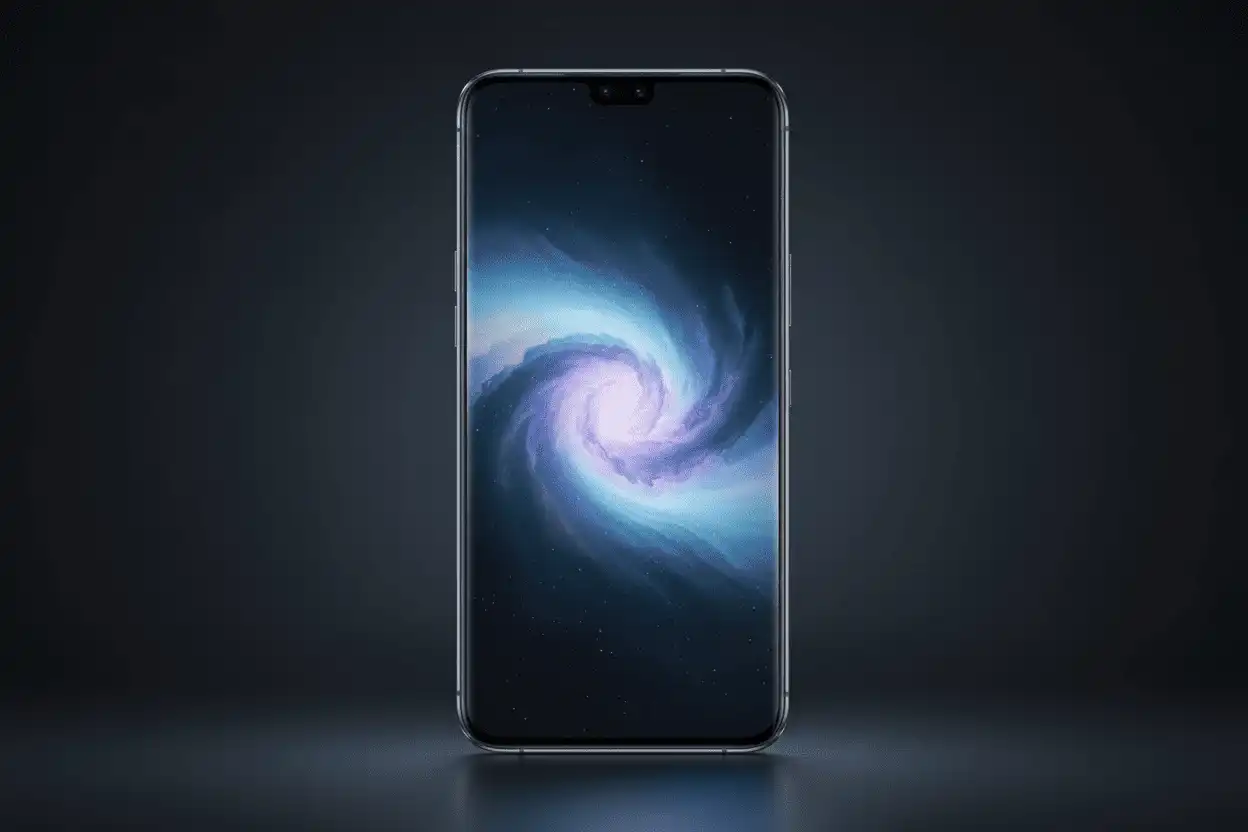
The front chassis features refined panel geometry and redesigned interface cutouts. Apple has engineered smaller sub-surface components for the TrueDepth sensor array beneath the OLED substrate.
This integration narrows the physical footprint of the Dynamic Island. The remaining cutout houses only the high-resolution front-facing lens and essential optical sensors, expanding usable screen area.
Tandem OLED Technology and Outdoor Legibility
The iPhone 18 Pro series adopts a tandem OLED stack similar to high-end iPad Pro displays. Stacking two organic light-emitting layers doubles panel efficiency while distributing electrical strain evenly.
The screen sustains 1,600 nits of full-screen brightness in typical HDR workflows, surging to 3,000 nits under direct sunlight. Variable 1Hz to 120Hz ProMotion refresh rates preserve battery life by idling down when reading static content.
On-Device Apple Intelligence and Neural Workflows
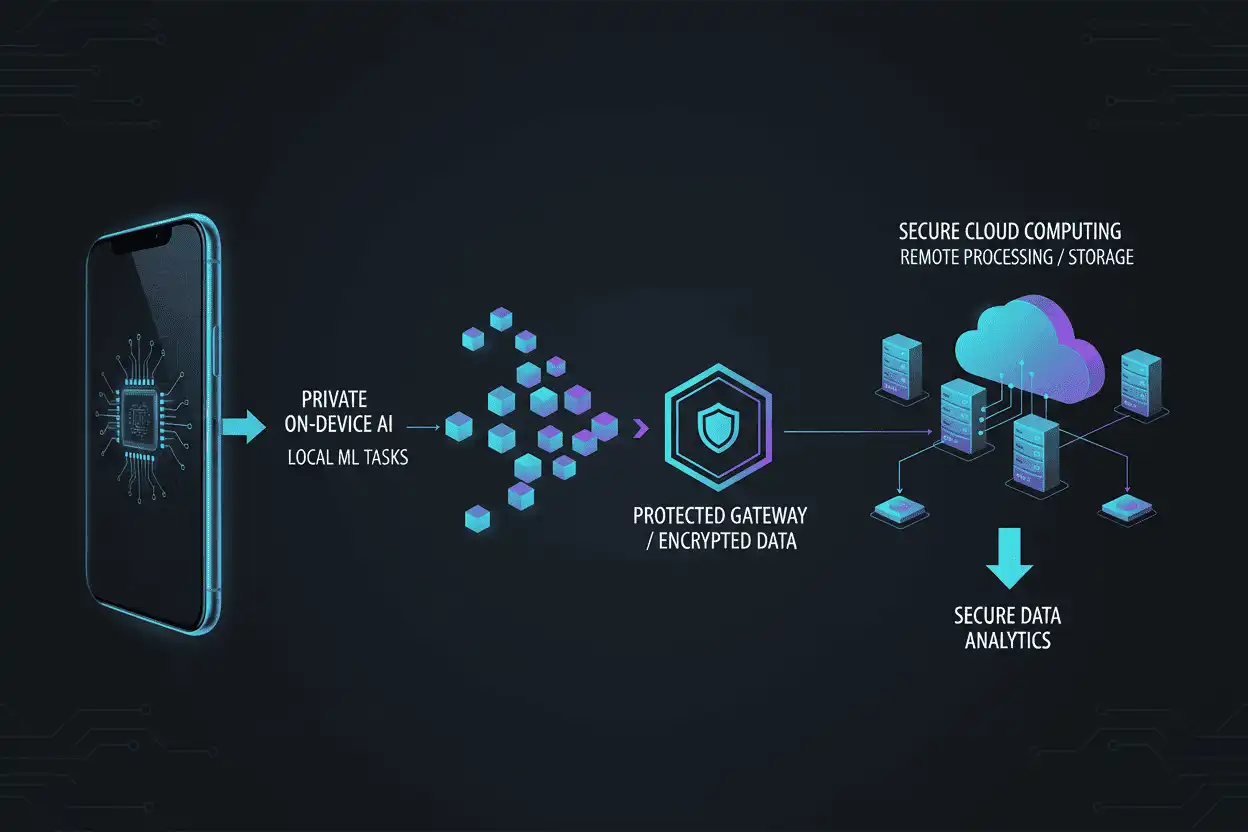
Apple Intelligence features on the iPhone 18 run on localized machine learning models that operate independent of cloud pipelines. Local execution keeps sensitive inputs, enterprise files, and personal data on the physical device.
Combining the 2nm A20 Pro processor with 12GB of unified RAM lets the system run multi-billion-parameter language and vision models locally. Tasks process near-instantly with zero network latency.
Multimodal Siri and Semantic Screen Context
The updated Siri engine processes continuous screen context, real-time audio, and cross-application data flows. You can dictate multi-step operational commands without relying on cloud processing.
The device parses documents, cross-checks calendar conflicts, and extracts contact metadata entirely through local memory. Sensitive workloads only route to Private Cloud Compute nodes when you request complex external data operations.
Connectivity, Battery Life, and Charging Architecture
Wireless performance improves through Apple’s custom-designed communications suite. The iPhone 18 integrates full Wi-Fi 7 certification supporting wide 320MHz channels and simultaneous Multi-Link Operation (MLO).
These protocols stabilize data streams on crowded network bands and reduce latency when streaming high-bandwidth local media. Cellular performance also benefits from upgraded sub-6GHz and mmWave modems with intelligent band aggregation.
Silicon-Carbon Battery Chemistry and Thermal Cycling
Internal power packs adopt silicon-carbon anode chemistry, replacing pure graphite designs. This engineering change packs higher energy density into the same physical battery volume.
The iPhone 18 Pro delivers up to 29 hours of continuous local video playback, while the 18 Pro Max exceeds 34 hours. Wired charging speeds reach 50% capacity in 20 minutes when connected to a 45W USB-PD charger.
Step-by-Step Setup and Migration Guide
Upgrading to a new hardware platform requires careful data preparation. Follow these steps to ensure complete data transfer, maintain active two-factor authenticators, and preserve device stability.
Step 1: Audit Local Storage and Clear Redundant Data
Open Settings > General > iPhone Storage on your existing device. Review installed applications, offload unused programs, and clear temporary messaging cache files before backing up.
Confirm that your total used storage fits comfortably within your target iPhone 18 model’s drive capacity. Preparing your data beforehand prevents transfer errors during initial boot.
Step 2: Prepare Encrypted Backups and Authenticator Keys
Create an encrypted local backup using a Mac or PC running current system software. Encrypted local backups preserve saved passwords, Wi-Fi networks, and Health data that standard cloud syncs often skip.
Open standalone authenticator apps (such as Google Authenticator, Microsoft Authenticator, or 1Password) and verify cloud syncing or export backup QR codes. Never wipe your old phone until secondary two-factor validation codes function on the new hardware.
Step 3: Transfer eSIM Profiles and Secure Carrier Connections
Verify that your current cellular carrier supports digital eSIM transfers via Apple Quick Transfer. If your current phone uses a physical SIM card, contact your carrier to convert the line to an active digital eSIM.
Keep your old phone connected to a stable Wi-Fi network with Bluetooth enabled. Place both devices side-by-side during the initial boot sequence to transfer cellular credentials without carrier support calls.
Step 4: Execute Peer-to-Peer Wi-Fi Device Migration
Power on the iPhone 18 and hold it near your existing phone until the Quick Start prompt appears. Choose the direct device-to-device transfer option rather than restoring from an iCloud snapshot.
Direct local peer-to-peer Wi-Fi transfers move local media libraries, application bundles, and system preferences without consuming home broadband bandwidth. Keep both devices connected to wall chargers throughout this transfer process.
Step 5: Initialize Neural Model Caching and Diagnostic Verification
Once setup completes, leave your iPhone 18 connected to its charger and local Wi-Fi overnight. This idle window gives the A20 Pro’s Neural Engine time to index search databases, compile facial recognition caches, and download local language models.
Open the App Store to install any pending application updates. Run a brief diagnostic check across all three camera lenses, the variable aperture mechanism, microphones, and network connections to verify hardware integrity.
Technical Hardware Comparison
Review this hardware matrix to evaluate the physical components, dimensions, and specifications across current and upcoming models.
| Specification | iPhone 18 Pro | iPhone 18 Pro Max | iPhone 17 Pro | iPhone 18 (Spring 2027) |
|---|---|---|---|---|
| SoC Architecture | A20 Pro (TSMC 2nm N2) | A20 Pro (TSMC 2nm N2) | A19 Pro (TSMC 3nm N3P) | A20 Standard (2nm Derived) |
| Unified Memory | 12GB LPDDR5X | 12GB LPDDR5X | 8GB / 12GB LPDDR5X | 8GB LPDDR5X |
| Display Size & Type | 6.3-inch Tandem OLED (120Hz) | 6.9-inch Tandem OLED (120Hz) | 6.3-inch Super Retina (120Hz) | 6.1-inch / 6.27-inch (120Hz) |
| Main Camera | 48MP Variable (f/1.4–f/2.4) | 48MP Variable (f/1.4–f/2.4) | 48MP Fixed (f/1.78) | 48MP Fixed (f/1.6) |
| Thermal Subsystem | Laser-Welded Vapor Chamber | Laser-Welded Vapor Chamber | Graphite Sheet / Titanium Frame | Structural Aluminum & Graphite |
| Connectivity | Wi-Fi 7 (320MHz) / 5G Advanced | Wi-Fi 7 (320MHz) / 5G Advanced | Wi-Fi 7 (160MHz) / 5G | Wi-Fi 7 (160MHz) / 5G |
| Base Storage Tier | 256GB NVMe | 256GB NVMe | 128GB / 256GB NVMe | 128GB NVMe |
| Release Date | September 2026 | September 2026 | September 2025 | Spring 2027 |
Generation-by-Generation Upgrade Recommendations
Every upgrade decision comes down to the age of your current device. Evaluating changes against your current hardware helps you decide whether to buy now or wait.
Upgrading from iPhone 13 Pro, iPhone 14 Pro, or Older
Owners of these older models will notice a dramatic difference in everyday speed. Moving to the iPhone 18 Pro brings USB-C 10Gbps connectivity, double the RAM capacity, and the bright Tandem OLED display.
The jump to 2nm silicon and on-device Apple Intelligence transforms voice workflows and computational tasks. Upgrading from these older models is a clear, worthwhile investment.
Upgrading from iPhone 15 Pro
The iPhone 15 Pro introduced titanium enclosures and initial Apple Intelligence support, but it runs warmer and has less memory overhead. The iPhone 18 Pro solves these limits with its internal vapor chamber and 12GB memory pool.
Mobile filmmakers will find the mechanical variable aperture and zero-shutter-lag 48MP lenses well worth the cost. General users who primarily browse and text can comfortably use the 15 Pro for another year.
Upgrading from iPhone 16 Pro or iPhone 17 Series
Upgrading from immediate predecessor models offers incremental gains for most consumers. The primary differences lie in the variable aperture camera optics, faster 2nm efficiency, and peak display brightness.
Unless you run complex commercial camera rigs or need high-end local AI computing, upgrading from an iPhone 17 provides modest real-world returns. Most owners should hold their current models through another product cycle.
Switching from High-End Android Flagships
Android flagships have offered variable aperture lenses and vapor chamber cooling for several product cycles. The iPhone 18 matches these physical features while integrating deep silicon-level hardware security and extended OS update commitments.
Creative professionals who use Final Cut Pro, Logic Pro, or DaVinci Resolve on macOS will appreciate the unified ecosystem workflows. Direct ProRes Log pipelines and low-latency AirDrop transfer speeds make this hardware an appealing entry point.
Common Migration Mistakes to Avoid
Rushing through a new phone purchase often leads to avoidable setup headaches and long-term costs. Avoid these common mistakes when ordering and configuring your device.
- Underestimating Base Storage for ProRes Workflows: Recording 4K 60fps or 120fps video in ProRes Log rapidly fills local storage arrays. Choosing the base 256GB tier can force you to use cumbersome external USB-C SSD drives during shoots. Content creators should choose a 512GB or 1TB configuration.
- Failing to Deregister iMessage on Legacy Hardware: Powering down an older phone without properly updating your Apple ID can cause incoming SMS messages to drop. Always verify that messaging services link correctly to your new hardware before wiping previous phones.
- Skipping Encrypted Local Backups: Cloud restorations can omit sensitive authentication tokens, requiring tedious manual logins across financial and enterprise portals. Creating an encrypted local backup saves these credentials and cuts setup time significantly.
- Using Outdated Low-Wattage Power Adapters: Reusing legacy 5W or 18W USB-A chargers restricts the device to slow, inefficient charging curves. Powering the iPhone 18 with a 45W USB-PD adapter ensures full fast-charging performance without generating excess heat.
Operational Best Practices
Following sound operational habits protects your device’s physical hardware and maintains strong battery health over years of daily use.
First, activate the built-in 80% charging limit under Settings > Battery > Charging Optimization if you work at a desk near power outlets. Limiting charging voltage prevents the chemical wear that degrades lithium-based batteries over time.
Second, take advantage of the Action Button and Camera Control capacitive sensor to streamline daily workflows. Mapping the Action Button to launch an automated shortcut or run an on-device accessibility tool saves time compared to hunting through home screens.
Third, keep at least 15% of your internal NVMe storage unallocated. Leaving adequate free space lets the APFS file system run background wear-leveling tasks, write dynamic virtual memory swap files, and prevent system slowdowns.
Recommended Tools & Diagnostic Resources
Use these reputable utilities, accessories, and testing tools to inspect, protect, and configure your iPhone 18 hardware.
- Geekbench 6: Measures multi-core CPU throughput and Metal graphics compute benchmarks to verify silicon performance.
- Blackmagic Camera App: Offers professional exposure curves, manual shutter angle controls, and variable aperture adjustments for video capture.
- Apple Support App: Provides secure diagnostics, coverage verification, and official warranty repair booking directly through Apple.
- Anker Prime 65W GaN Charger: A compact multi-port adapter that supplies certified USB-PD 3.0 power for maximum charging speeds.
- OWC Envoy Pro Mini SSD: A compact, high-speed USB-C drive built for capturing sustained 4K 120fps ProRes Log footage directly in the field.
Authoritative References
Consult these official standards organizations, developer documentation hubs, and research repositories for deeper technical specifications:
- Apple Developer Documentation: AVFoundation and Metal APIs
- Wi-Fi Alliance: Wi-Fi 7 (802.11be) Interoperability Standards
- 3GPP Technical Specifications: 5G Advanced Standards
- TSMC Technology Overview: 2nm Gate-All-Around (GAA) Foundry Processes
Summary of Key Findings
The iPhone 18 lineup balances cutting-edge silicon engineering with an updated commercial launch strategy. Keep these central conclusions in mind:
The split launch schedule changes how buyers should plan upgrades. Professionals needing high-end tools can adopt the iPhone 18 Pro in September 2026, while price-conscious shoppers can evaluate the base model in Spring 2027.
Upgrades like TSMC’s 2nm A20 Pro chip, 12GB of unified RAM, and physical variable aperture lenses resolve thermal and memory bottlenecks seen in earlier models. These changes make the iPhone 18 series a capable platform for on-device machine learning and professional video workflows alike.
Buyer Action Plan
Begin by checking the physical trade-in condition and battery health of your current device. High trade-in allowances make the Pro model’s launch pricing far more approachable.
If you create content, shoot professional video, or rely on heavy on-device compute, order the iPhone 18 Pro or Pro Max. Everyday users should wait for the Spring 2027 base model, which delivers core performance in a cost-effective design.
Frequently Asked Questions
When does the iPhone 18 lineup officially release?
The lineup uses a split release schedule. The flagship iPhone 18 Pro and iPhone 18 Pro Max launched in September 2026. The standard, non-Pro iPhone 18 is scheduled to arrive in Spring 2027. This phased rollout lets Apple balance global production lines across separate calendar quarters.
What makes the iPhone 18 Pro’s variable aperture camera useful?
The variable aperture lens uses mechanical internal blades that shift between f/1.4 and f/2.4 based on shooting conditions. The wide f/1.4 setting gathers maximum light and produces natural optical bokeh for portraits. The f/2.4 setting deepens sharpness across wide landscape compositions and prevents highlight clipping in bright sun.
How does the 2nm A20 Pro chip improve real-world performance?
Built on TSMC’s 2nm nanosheet process, the A20 Pro chip runs roughly 15% faster while using up to 30% less power than older 3nm designs. It packs smaller Gate-All-Around transistors that eliminate power leakage. This efficiency lowers operating temperatures and extends battery life under heavy gaming and recording loads.
Is upgrading from an iPhone 16 Pro or 17 Pro worthwhile?
For most everyday users, upgrading from an iPhone 16 Pro or 17 Pro offers modest performance returns. The most meaningful improvements are the mechanical variable aperture camera, 12GB unified memory array, and internal vapor chamber cooling. Unless you shoot heavy commercial video or run complex local AI models, holding your current device is a practical choice.
Why does the iPhone 18 Pro use a vapor chamber cooling system?
Modern 2nm processors and local AI models generate concentrated internal heat during sustained computational workloads. A laser-welded copper and titanium vapor chamber spreads heat quickly away from the processor to the outer chassis. This active heat dissipation stops thermal throttling, keeping frame rates steady during long gaming sessions and 4K recording.
Will older MagSafe and Qi2 accessories work with the iPhone 18?
Yes, the iPhone 18 fully supports existing MagSafe accessories and Qi2 wireless charging stations. The rear magnetic ring matches earlier physical dimensions, ensuring compatibility with your current wallets, car mounts, and battery packs. It also supports higher sustained wireless charging rates when paired with updated high-wattage power bricks.
How much storage should I buy on the iPhone 18 Pro?
The Pro models start with a base storage capacity of 256GB, which suits everyday app use, photography, and music downloads. If you record 4K 120fps video in ProRes Log or store large on-device AI models, you should choose the 512GB or 1TB tier. Picking the right storage early on avoids having to carry external USB-C SSD drives in the field.
Does the standard iPhone 18 coming in Spring 2027 feature the same camera?
No, the upcoming standard iPhone 18 uses a fixed-aperture 48MP dual-camera module rather than the mechanical variable aperture lens. It also uses a standard aluminum frame with graphite thermal dissipation instead of a vapor chamber. Waiting for the base model saves money, but the Pro model remains the exclusive home for mechanical camera controls.