Historical Fashion Retail Store Reduction at a Glance
Historical fashion retail store reduction describes the multi-decade decline in physical apparel storefronts and total commercial retail square footage. This ongoing correction stems from overbuilt commercial space, shifting consumer preferences, digital commerce adoption, and leveraged financial balance sheets.
The contraction gained initial momentum during the 2008 financial crisis, escalated through the 2017 to 2019 structural store closures, and accelerated during global supply interruptions. Rather than signaling an end to physical shopping, this transformation reflects a disciplined transition from redundant retail square footage toward curated, omnichannel brand hubs.
- Core Catalysts: Over-malling, private equity debt loads, direct-to-consumer sales, and changing foot traffic patterns.
- Primary Victims: Mid-tier department stores, suburban specialty apparel chains, and commoditized mall anchors.
- Current State: Fleet rationalization, smaller store footprints, and unified inventory models across digital and physical touchpoints.
Introduction: Understanding the Retail Footprint Shift
Physical fashion retail once operated on a straightforward growth model. Brands scaled market valuation by signing long-term commercial leases and expanding their store counts across suburban malls and urban shopping corridors.
During the latter half of the twentieth century, retail developers built space at an unprecedented pace. The United States developed several times more gross leasable area per capita than other advanced economies, creating an unsustainable surplus of apparel stores.
This comprehensive guide details the historical reduction of fashion retail stores. Industry analysts, researchers, students, and retail operators will gain an objective understanding of why thousands of stores closed, which business models suffered most, and how physical retail continues to adapt.
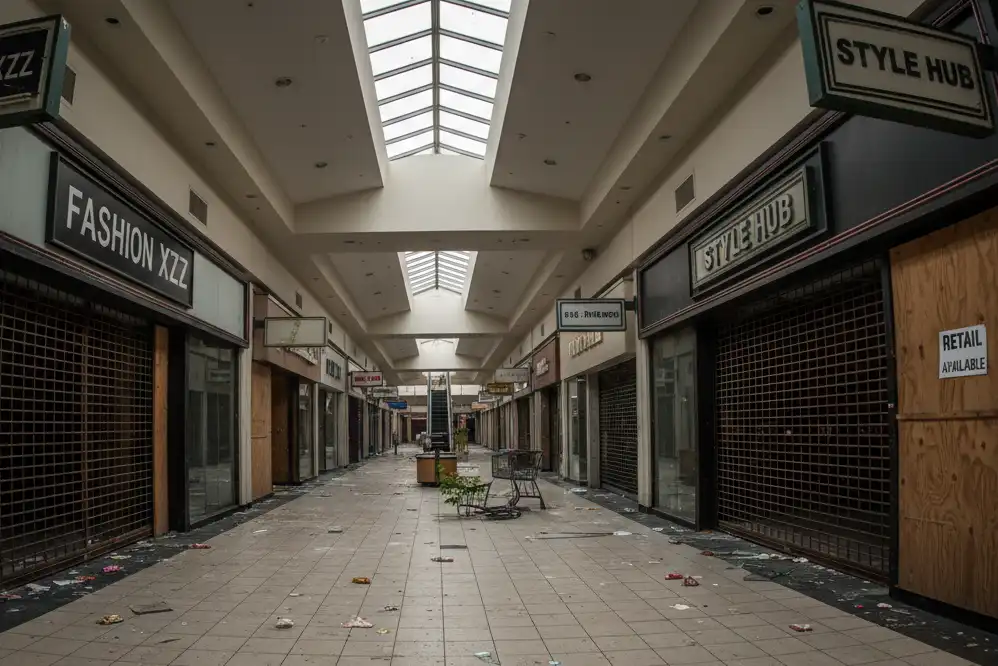
The Timeline of Fashion Store Downsizing
Store closures did not occur in a single vacuum. They represent the culmination of distinct economic eras, structural shifts, and operational adjustments over decades.
The Post-War Suburban Expansion (1950s–1980s)
The post-World War II period saw retail capital move away from downtown department stores toward regional shopping centers. Enclosed malls became the primary shopping venues for American and European consumers.
Fashion brands opened multiple locations within narrow geographic radiuses. Retailers prioritized geographic proximity to suburban housing developments over digital infrastructure or supply chain efficiency.
By the end of the 1980s, the market reached high store density. Discretionary apparel spending supported this footprint while disposable income grew, but developer saturation set the foundation for long-term vulnerability.
Over-Malling and Consolidation (1990s–2007)
The 1990s and early 2000s introduced category-killer big-box retailers and rapid specialty apparel expansion. Chains expanded aggressively across strip malls and regional lifestyle centers.
Mergers and acquisitions reduced the number of independent operators. Large retail holding companies bought regional department store banners and replaced distinct regional brands with homogeneous national storefronts.
This period created repetitive retail corridors. Shoppers found identical national apparel chains in adjacent developments, which steadily diluted foot traffic and decreased sales per square foot.
The Great Recession and Early Fleet Contraction (2008–2014)
The 2008 global financial crisis exposed fundamental weaknesses in debt-heavy retail operations. Consumer discretionary spending dropped, forcing retailers to cut capital expenditures immediately.
Apparel chains responded by shuttering unprofitable secondary and tertiary mall locations. Retail executives prioritized short-term cash flow preservation over speculative brand expansion.
Simultaneously, e-commerce platforms matured into secure, everyday purchasing channels. Consumers realized they no longer needed physical proximity to access a wide variety of clothing styles.
The Structural Rationalization Wave (2015–2019)
Between 2015 and 2019, store closures reached historic highs. Industry commentators labeled this era the retail apocalypse, though analysts recognized it as overdue structural rightsizing.
Dozens of legacy specialty apparel chains and department store institutions filed for Chapter 11 bankruptcy reorganization. Many liquidated completely after failing to service unsustainable corporate debts.
Class B, C, and D shopping malls experienced significant anchor vacancies. When primary fashion anchors closed, remaining specialty tenants exercised lease exit clauses, triggering cascading store closures.
The Operational Reconfiguration (2020 and Beyond)
Global economic shocks accelerated store closures planned for the following decade into a compressed window. Retailers conducted exhaustive portfolio reviews and permanently shuttered marginal locations.
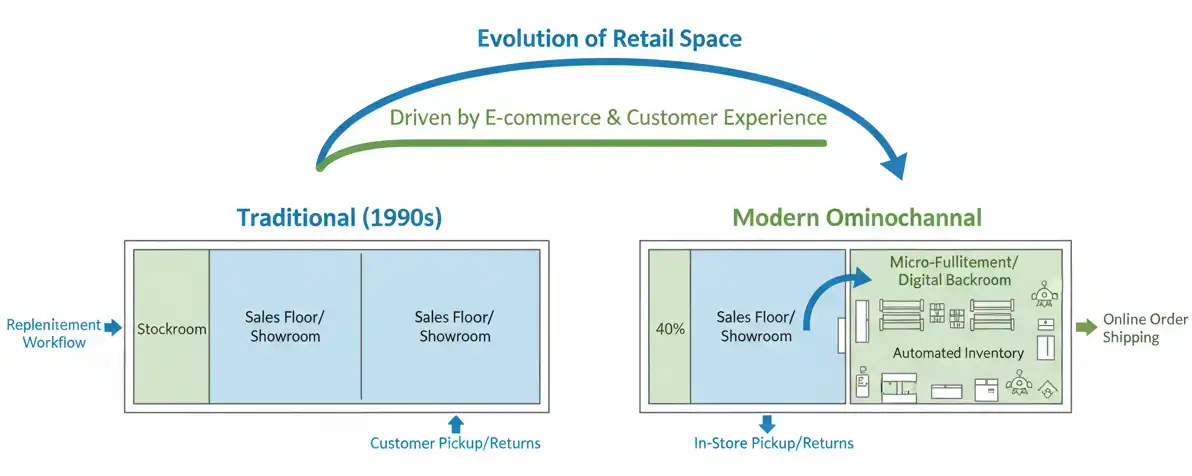
Surviving brands recognized that physical store networks had to support online fulfillment. Stores transitioned from static product repositories into integrated logistics hubs and experiential showrooms.
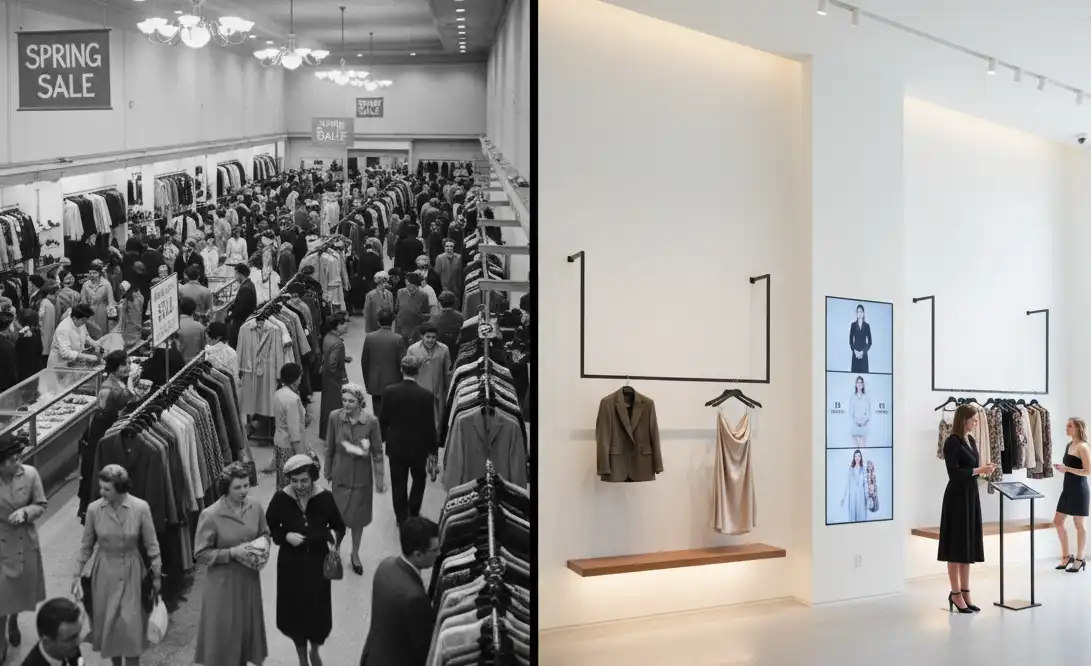
Today, store reduction has yielded a leaner, more deliberate fleet model. Leading fashion houses build fewer, strategically positioned flagship locations while shuttering redundant suburban storefronts.
Macroeconomic Drivers and Financial Debt Structures
Store reduction is rarely driven solely by consumer disinterest. Financial engineering, real estate costs, and macroeconomic pressures frequently dictate physical store closures.
Leveraged Buyouts and Debt Service
During the 2000s, private equity firms acquired numerous established fashion brands and department store chains. These transactions relied heavily on leveraged buyouts financed by high-yield debt.
Acquired retailers used operational cash flow to service debt payments instead of modernizing store interiors or updating digital inventory systems. When sales softened, debt payments quickly became unsustainable.
Bankruptcy courts became the primary vehicle for shedding costly, long-term commercial lease commitments. Financial distress, rather than operational obsolescence, forced many apparel brands to liquidate extensive store networks.
Real Estate Leases and Cost per Square Foot
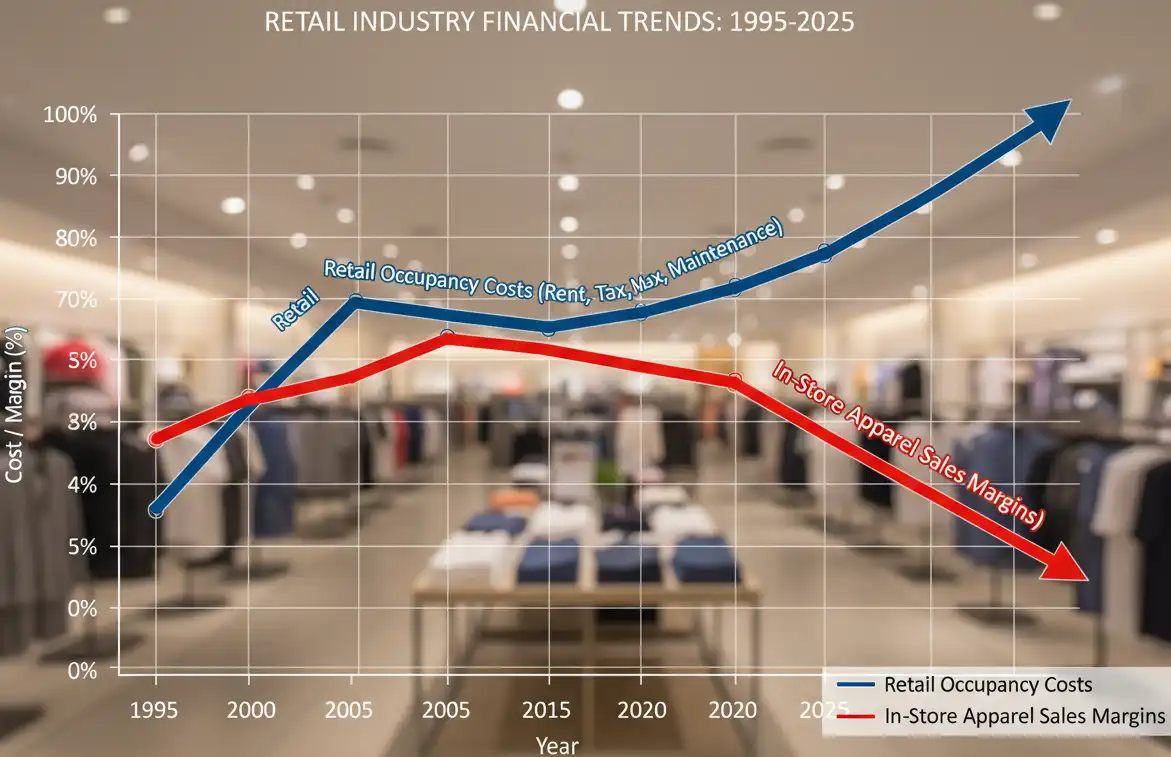
Commercial lease structures historically tied retailers to ten- or fifteen-year commitments with fixed annual rent escalations. These contractual obligations limited operational flexibility when foot traffic declined.
As suburban foot traffic slowed, the occupancy cost ratio rose relative to in-store sales volumes. Retailers could not maintain profitability while paying fixed rents on underperforming square footage.
Landlords faced their own mortgage debt obligations and often refused to lower base rents. When leases expired, fashion brands opted for non-renewal, systematically reducing their total fleet footprint.
Technological Shifts: Catalogs, E-Commerce, and Omnichannel
Technological advancement fundamentally dismantled physical retail’s monopoly on consumer distribution. As alternative shopping options improved, the necessity of maintaining sprawling store fleets diminished.
The Remote Commerce Precedent
Long before the internet, mail-order catalogs from Sears and Montgomery Ward demonstrated that consumers would buy apparel remotely. These catalogs laid early foundations for distributed supply chains and home delivery.
Modern digital platforms expanded remote commerce by removing printing delays and physical page limits. Digital storefronts offered unlimited shelf space without the overhead costs of retail staffing, utility bills, or commercial leases.
As consumer confidence in online sizing, visual representations, and payment security grew, remote shopping moved from niche novelty to mainstream habit.
Mobile Penetration and Social Commerce
Smartphones placed apparel marketplaces directly into consumers’ hands throughout the day. Shoppers no longer dedicated Saturday afternoons to browsing regional malls.
Social media platforms shifted discovery away from window displays and storefront mannequins. Algorithms now introduce emerging brands directly to consumers, bypassing the physical retail discovery pipeline.
Direct-to-consumer brands scaled rapidly online without building physical fleets. Traditional apparel retailers had to reduce store overhead to match the agile pricing and operational structures of digital competitors.
The Evolution of Fashion Consumer Behavior
Consumer expectations around convenience, speed, and variety evolved rapidly over the past two decades. Physical stores that failed to match these expectations quickly lost their customer base.
The Demand for Instant Inventory Transparency
Shoppers grew frustrated by visiting physical stores only to find specific sizes, cuts, or colors out of stock. Digital retailers offered real-time inventory visibility across global warehouses.
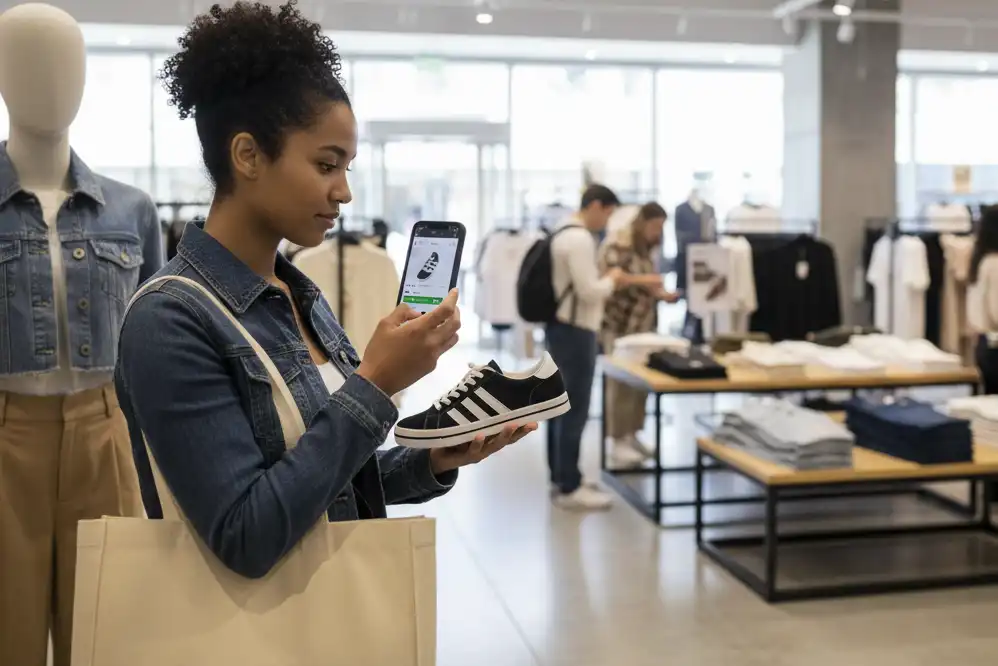
Consumers began researching products online before stepping into a store. If a nearby brick-and-mortar location could not confirm item availability, shoppers completed their orders online instead.
This dynamic turned unoptimized store visits into negative brand interactions. Retailers responded by reducing secondary locations that carried limited, incomplete inventory selections.
Generational Shifts in Discretionary Spend
Subsequent generations of consumers shifted a larger share of discretionary income from material goods to experiences, dining, and travel. Apparel purchases accounted for a declining percentage of overall household spending.
Fast-fashion producers shortened trend production cycles from months to days. Traditional retailers running quarterly seasonal lines could not maintain consumer interest across expansive physical layouts.
Consumers also embraced sustainable fashion, garment rental platforms, and digital resale marketplaces. These alternatives reduced reliance on purchasing brand-new clothing from traditional retail racks.
The Department Store Squeeze and Anchor Tenant Attrition
Department stores once anchored the commercial ecosystem of shopping malls. Their contraction caused severe ripple effects across the entire fashion retail landscape.
The Attrition of the Middle Tier
Mid-tier department stores occupied tens of millions of square feet across the globe. They served as primary distribution points for major sportswear, cosmetics, and ready-to-wear fashion labels.
These retailers faced simultaneous competition from off-price liquidators, fast-fashion chains, and luxury flagships. The middle market eroded as consumers gravitated toward either steep discounts or premium brand experiences.
Unable to differentiate their merchandise, regional department stores shuttered hundreds of massive locations. Their departure left cavernous vacancies that suburban shopping centers struggled to fill.
Co-Tenancy Clauses and Cascading Closures
Specialty fashion leases often contain contractual co-tenancy clauses. These stipulations protect smaller retailers by requiring shopping centers to maintain key anchor tenants at specified occupancy thresholds.
When an anchor department store closed permanently, neighboring boutique tenants gained the legal right to renegotiate rents or terminate leases prematurely. This triggered domino-style closure waves across commercial centers.
Mall operators watched peripheral specialty chains exit en masse. The loss of anchor foot traffic turned previously profitable retail corridors into non-viable commercial environments.
Square Footage Downsizing vs. Store Count Elimination
Examining store reduction requires distinguishing between closing a business location entirely and optimizing square footage. Modern retailers frequently keep stores open while drastically shrinking their physical size.
The Transition to Micro-Formats and Showrooms
Legacy apparel retailers often operated stores exceeding 15,000 to 20,000 square feet. These large spaces required significant capital investments to light, staff, heat, and keep fully stocked.
Contemporary brands favor focused footprints ranging from 2,000 to 5,000 square feet. These compact spaces display curated seasonal collections while relying on centralized logistics networks for home delivery.
Showroom concepts separate product discovery from inventory storage. Customers try on physical sample garments in-store and place digital orders for same-day or next-day warehouse dispatch.
The Rise of Dark Stores and Micro-Fulfillment
Some apparel companies reduced public-facing retail sales floors to repurpose rear backrooms into micro-fulfillment centers. These spaces service local online orders directly within urban zones.
This operational shift reduces customer-facing retail square footage while preserving the building’s utility. Retailers lower their final-mile shipping expenses without paying premium showroom buildout costs.
Downsizing allows brands to maintain a physical presence in key markets while slashing inventory holding costs, staffing requirements, and utility expenses.
Strategic Store Fleet Rationalization: Step-by-Step
Downsizing a store fleet requires structured planning to protect brand equity, manage operational liabilities, and retain existing customers. Below is the operational methodology used by retail restructuring specialists.
-
Conduct a Complete Four-Wall Financial Audit
What: Calculate the isolated four-wall EBITDA for every individual storefront across the portfolio.
Why: Corporate overhead allocations often mask whether an individual store location generates cash or operates at a net loss.
How: Isolate direct store revenues against direct operational expenses, including local labor, utilities, shrinkage, freight, and specific lease payments.
Common Mistake: Evaluating stores solely on gross top-line revenue without accounting for high local occupancy costs and returns processing.
Pro Tip: Track local digital sales generated within the store’s geographic zip codes to quantify the physical location’s regional marketing halo.
-
Evaluate Lease Structures and Exit Flexibility
What: Audit commercial lease terms, termination windows, kick-out clauses, and upcoming expiration milestones.
Why: Terminating leases prematurely without contractual protections can trigger severe financial penalties from commercial landlords.
How: Categorize the retail portfolio into immediate expirations, locations with actionable co-tenancy violations, and stores requiring formal buyout negotiations.
Common Mistake: Closing store doors while remaining fully liable for multi-year lease payments, maintenance fees, and property taxes.
Pro Tip: Approach landlords with performance data well ahead of formal lease renewal windows to negotiate reduced square footage or percentage-rent terms.
-
Model Regional Omnichannel Cannibalization and Retention
What: Estimate how much revenue from a closed store will successfully transition to neighboring units or the brand’s e-commerce platform.
Why: Closing a store can cause an immediate drop in local digital sales if customers feel abandoned by the brand.
How: Analyze historical customer retention data from past store closures in comparable regional demographics.
Common Mistake: Assuming one hundred percent of in-store spending will naturally migrate to the brand’s website without targeted marketing.
Pro Tip: Launch personalized omnichannel promotions and direct mailers to local loyalty members months before closing a physical store.
-
Execute Structured Inventory Liquidation and Reverse Logistics
What: Systematically clear existing on-site merchandise without eroding broader brand equity or damaging gross product margins.
Why: Trapped inventory ties up working capital and creates costly return freight expenses back to central distribution hubs.
How: Institute progressive discount pricing schedules over a structured eight-to-twelve-week exit window, transferring remaining core stock to regional flagships.
Common Mistake: Dumping premium branded inventory into deep discount channels too quickly, which trains customers to avoid full-price purchases.
Pro Tip: Reserve high-demand, core-season styles for transfer to strong-performing stores, using discount markdowns primarily on end-of-season items.
-
Manage Operational Wind-Down, Personnel, and Asset Recovery
What: Oversee physical store handovers, fixture sales, staff transitions, and utility disconnections according to lease terms.
Why: Failing to return commercial real estate in broom-clean condition can void security deposits and prompt legal disputes.
How: Deploy trained retail field teams to audit mechanical equipment, recover branded display fixtures, and manage employee severance procedures.
Common Mistake: Neglecting store associates during final weeks, leading to elevated inventory shrinkage, poor customer service, and damaged displays.
Pro Tip: Offer clear retention bonuses to store managers who stay through the final asset recovery and landlord handover inspection.
Historical Eras of Retail Store Reduction Compared
The triggers, formats, and corporate responses surrounding store closures have changed significantly across modern retail history.
| Historical Era | Primary Economic Catalyst | Most Affected Retail Formats | Dominant Corporate Strategy | Long-Term Real Estate Impact |
|---|---|---|---|---|
| 1970s–1980s | Urban de-densification; flight to suburban centers | Downtown flagship department stores; independent boutiques | Relocation to enclosed regional shopping malls | Decline of historic urban shopping districts |
| 1990s–2000s | Category killer expansion; retail overbuilding | Small town main street apparel; regional department stores | Corporate mergers, acquisitions, and brand consolidation | Homogenization of nationwide suburban retail corridors |
| 2008–2014 | Global financial crisis; consumer credit contraction | Mid-tier apparel chains; Class C mall storefronts | Defensive cost cutting; pruning non-performing leases | Initial rise of prolonged mall vacancy rates |
| 2015–2019 | Digital commerce growth; private equity debt defaults | Legacy mall specialty stores; department store anchors | Chapter 11 restructurings; aggressive digital investment | Widespread demalling and commercial rezoning projects |
| 2020–Present | Operational cost inflation; supply chain rebalancing | Unprofitable secondary locations; outsized flagship units | Micro-formats, omnichannel hubs, and showrooming | Conversion of retail space to mixed-use and housing |
Expert Insights on Store Fleet Rightsizing
Successfully reducing a store network requires balanced operational analysis. Retail executives must evaluate both physical foot traffic and regional brand equity.
Physical stores serve as physical billboards that generate nearby web traffic and customer trust. Closing a retail location often leads to a measurable decline in regional online sales over the following eighteen months. Before shutting a store, calculate its contribution to local customer acquisition costs across all channels.
Avoid traditional ten-year fixed leases when repositioning an apparel fleet. Modern retail real estate strategies favor two-to-four-year commitments paired with turnover-based rent structures. This approach aligns property expenses directly with verified in-store foot traffic volumes.
Store closures risk alienating experienced sales associates who hold direct relationships with high-value local clients. When consolidating regional stores, offer relocation incentives to top client-facing sales staff. Transferring trusted personnel to nearby locations helps protect high-margin customer accounts.
Costly Mistakes in Fleet Reductions
Pruning a retail network carries significant operational and financial risks. When executed poorly, downsizing can accelerate business decline rather than stabilize balance sheets.
Using Top-Line Revenue as the Primary Metric
A busy store is not necessarily a profitable store. Locations in high-prestige metropolitan shopping districts often generate impressive top-line sales while losing money on high rents, staffing, and local logistics.
Closing lower-volume suburban stores while protecting expensive, unprofitable flagship locations drains corporate cash reserves. Retailers must judge each location on net cash contribution rather than vanity revenue figures.
Starving Remaining Stores of Capital
Some retail leadership teams use the cost savings from store closures purely to fund short-term dividend payments or interest charges. This leaves surviving locations underfunded and unmaintained.
Physical stores require continuous investment in fixtures, point-of-sale technology, and interior visual merchandising. Neglected storefronts alienate remaining shoppers, driving further drops in foot traffic and forcing another round of closures.
Ignoring Lease Termination Liabilities
Shutting doors ahead of schedule without a negotiated exit agreement triggers immediate legal action from commercial landlords. Landlords can accelerate remaining rent balances and demand damages for tenant defaults.
Unplanned closure programs have pushed marginally solvent apparel companies into sudden, involuntary liquidation. Real estate obligations must be addressed through coordinated renegotiations or formal legal restructurings.
Modern Best Practices for Physical Retail Networks
Sustainable fashion retailers treat physical stores as integrated components of a broader commerce engine. Successful operators follow key foundational principles to manage their physical footprints.
- Unify Store and Digital Inventories: Allow physical store associates to fulfill online orders and give digital shoppers access to in-store stock for local pickup.
- Implement Strict Footprint Disciplines: Keep retail sales floors compact, dedicating capital to high-turnover merchandise and curated product storytelling.
- Test Locations with Pop-Up Leases: Use short-term temporary leases to validate foot traffic, demographics, and product demand before signing long-term commitments.
- Design for Cross-Channel Service: Equip physical locations to process digital returns efficiently, converting return-desk visits into new retail purchases.
- Regularly Review Real Estate Portfolios: Conduct formal six-month reviews of all commercial leases to identify underperforming assets before losses accumulate.
Industry Tools and Analytical Resources
Retail analysts, operations managers, and real estate developers rely on dedicated analytical platforms to evaluate store networks, foot traffic trends, and local market demographics.
- Placer.ai: Location analytics platform providing foot-traffic counts, dwell times, visitor origins, and cross-shopping habits across physical stores.
- CoStar Group: Comprehensive commercial real estate database tracking lease rates, building vacancies, tenant mixes, and historical commercial property transactions.
- Esri ArcGIS Business Analyst: Geospatial software combining demographic data, consumer spending patterns, and spatial analytics for site selection and portfolio rationalization.
- National Retail Federation (NRF) Research: Industry association publishing retail economic trends, consumer spending projections, and annual store closure reports.
- U.S. Census Bureau Monthly Retail Trade: Authoritative government data tracking nationwide retail sales volumes, inventory ratios, and e-commerce market penetration.
Recommended Internal Topics
Explore these related resources to build a deeper understanding of retail operations, commercial real estate trends, and fashion commerce strategy.
- The Economics of Modern Shopping Mall Re-Anchoring Strategies
- How Leveraged Buyouts Impacted Mid-Tier Department Stores
- Omnichannel Inventory Management: Unifying Online and In-Store Systems
- Calculating the Marketing Halo Effect of Physical Flagship Stores
- Commercial Real Estate Lease Clauses: Co-Tenancy and Kick-Out Terms
- Direct-to-Consumer Transition: From Pureplay Digital to Micro-Showrooms
Authoritative Industry References
The historical data, operational concepts, and economic trends discussed in this guide draw on foundational retail research and public reporting from recognized industry institutions.
- International Council of Shopping Centers (ICSC): Research on global shopping center occupancy, tenant performance, and commercial lease trends.
- Federal Reserve Economic Data (FRED): Historical records tracking commercial real estate values, retail employment, and consumer discretionary apparel spending.
- Harvard Business School Historical Collections: Archival business research documenting the rise and fall of early American department store chains.
- U.S. Bureau of Labor Statistics (BLS): Employment metrics tracking the multi-decade transition of the retail sales and merchandising workforce.
Key Takeaways
Understanding the history of fashion retail store reduction helps industry professionals make better real estate, financial, and operational decisions.
- The reduction in fashion store count reflects a necessary market correction following decades of aggressive overbuilding.
- Financial debt burdens from private equity leveraged buyouts forced many retailers into bankruptcy and liquidation, independent of customer interest.
- Technological changes eliminated physical retail’s monopoly on distribution, requiring stores to justify their operating costs through unique experiences or fulfillment support.
- Shrinking a store’s square footage through micro-formats and showroom designs is often more effective than closing the location entirely.
- Physical stores provide a proven marketing halo effect that supports regional digital sales; closures must be managed carefully across channels.
- Modern retail success relies on balanced, flexible store networks that work together with digital sales channels, rather than expanding footprint size alone.
Strategic Outlook for Apparel Retailers
The historical reduction of fashion retail stores does not mean the end of brick-and-mortar commerce. Physical stores remain essential touchpoints for tactile product discovery, immediate satisfaction, and brand building.
The era of measuring retail success primarily by store count or gross square footage is over. Today, high-performing fashion brands focus on profitability per square foot, cross-channel customer loyalty, and unified inventory systems.
Retail leaders must continually evaluate their commercial property portfolios. By treating physical storefronts as dynamic hubs within an omnichannel system, brands can build resilient businesses that connect with modern shoppers across every touchpoint.
Frequently Asked Questions
Historical fashion retail store reduction refers to the systematic closing of physical clothing stores and the reduction of retail square footage over several decades. This trend stems from market overbuilding, digital shopping alternatives, changing consumer priorities, and unsustainable corporate debt structures across legacy apparel brands.
The wave of closures between 2017 and 2019 resulted from several factors: heavy leveraged buyout debts, growing e-commerce adoption, rising lease costs, and changing mall foot traffic patterns. Many debt-laden apparel chains could not fund digital upgrades while servicing loan interest, leading to bankruptcy and mass store shutdowns.
Developers built too many enclosed malls during the late twentieth century, which diluted foot traffic across competing locations. When anchor department stores began closing, lease co-tenancy clauses allowed specialty apparel tenants to terminate leases early or demand lower rents, triggering widespread closures throughout secondary and tertiary shopping centers.
No. Physical fashion retail is not dying; it is rightsizing. While unoptimized, duplicate stores in struggling malls have closed, brands continue to invest in smaller, curated spaces, urban flagships, and integrated fulfillment hubs that support both in-person shopping and digital orders.
Closing stores eliminates a brand’s physical presence in a trade area entirely. Downsizing square footage reduces the sales floor footprint of existing units, often shifting toward compact micro-formats or showroom concepts that display curated merchandise while shipping orders directly from central warehouses.
The marketing halo effect describes how a physical storefront acts as a local advertisement that builds brand awareness and trust. Studies show that maintaining a physical store often boosts online orders and brand searches within that zip code, while closing the location can lead to a drop in regional e-commerce revenue.
Co-tenancy clauses are commercial lease terms that allow specialty store tenants to negotiate rent discounts or exit their leases if key anchor tenants leave the shopping center. When major department stores shutter, these clauses allow smaller fashion retailers to close their locations without paying standard termination penalties.
Modern fashion retailers use smaller store designs, shorter lease terms, and unified inventory systems. Rather than opening hundreds of identical units, they place stores in high-traffic shopping areas, use spaces to fulfill digital orders, and regularly adjust their physical footprints using real-time foot-traffic data.