Henley Shirt Women: The Ultimate Fit, Fabric, and Styling Guide
Table of Contents
- What Is a Women’s Henley Shirt?
- The Anatomy of a High-Quality Women’s Henley
- Fabric Guide: Waffle, Ribbed, and Jersey Knits
- Fit Profiles: Finding the Right Silhouette
- How to Style a Henley Shirt: Outfit Formulas
- Step-by-Step Guide: Fit-Testing and Curating Your Henley
- Fabric Comparison Matrix
- Seasonal Wardrobe Transitions
- Garment Care and Fabric Longevity
- Expert Tips for Advanced Layering
- Common Mistakes to Avoid
- Capsule Wardrobe Best Practices
- Tools and Resources
- Internal Linking Suggestions
- External Authority References
- Key Takeaways
- Frequently Asked Questions
Quick Overview: The Modern Women’s Henley
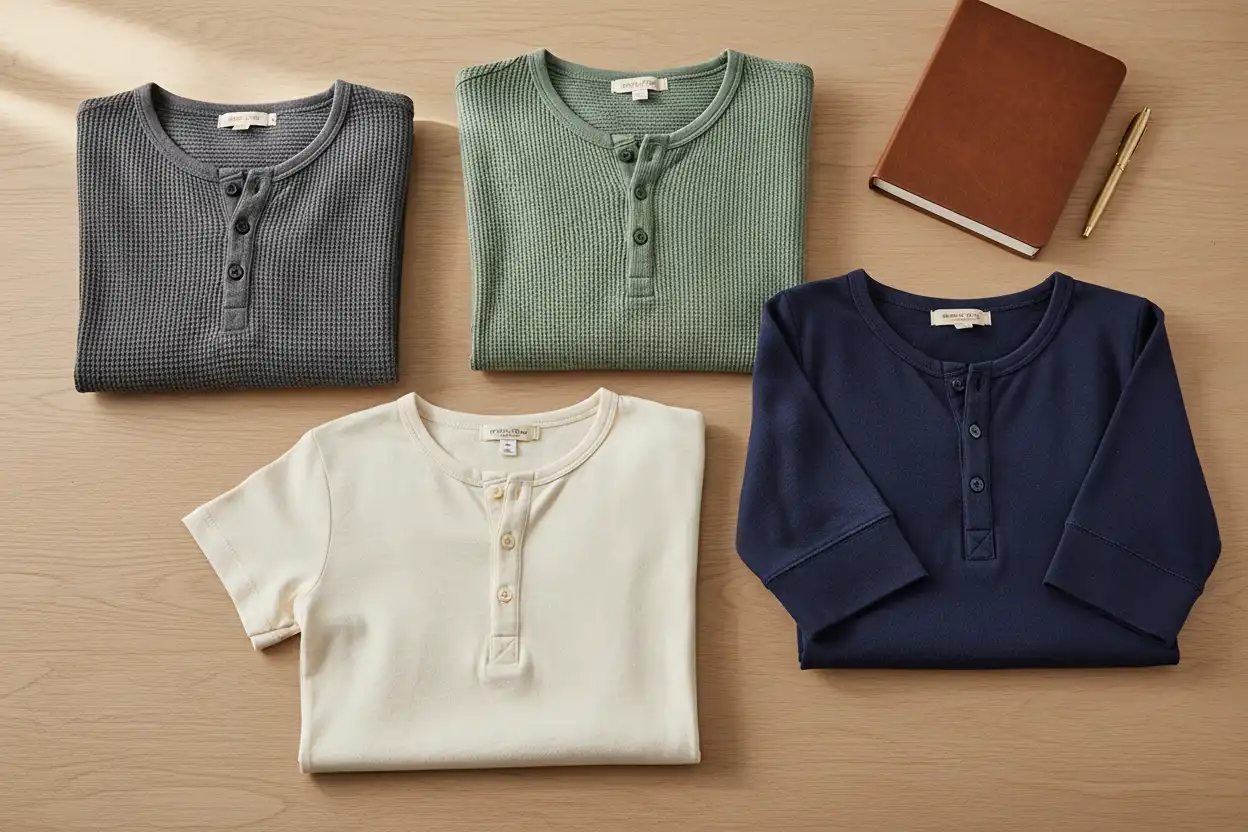
A women’s henley shirt is a collarless pullover top distinguished by a front button placket typically measuring two to six inches in length. It bridges the gap between the casual ease of a standard crewneck T-shirt and the tailored structure of a polo or button-down shirt.
Available in short-sleeve, three-quarter, and long-sleeve lengths, henleys are commonly constructed from thermal waffle knits, ribbed cotton, or modal jerseys. Their adjustable neckline allows for versatile temperature regulation, layering depth, and varied styling aesthetics across every season.
What Is a Women’s Henley Shirt?
The henley shirt originated in the town of Henley-on-Thames in Oxfordshire, England, as the official uniform for rowing crews. Rowers valued the garment because the collarless design eliminated neck chafing during competitive regattas, while the front placket allowed athletes to unbutton the chest for ventilation.
Over the past several decades, womenswear designers adapted this athletic staple into a foundational wardrobe basic. The contemporary women’s henley retains the classic functional placket while incorporating refined darts, contoured side seams, softened shoulder slopes, and drape-focused fabrics.
Whether you follow a minimalist capsule wardrobe or prefer layered, textured outfits, the henley offers a subtle visual break at the neckline that flatters every body type.
The Anatomy of a High-Quality Women’s Henley
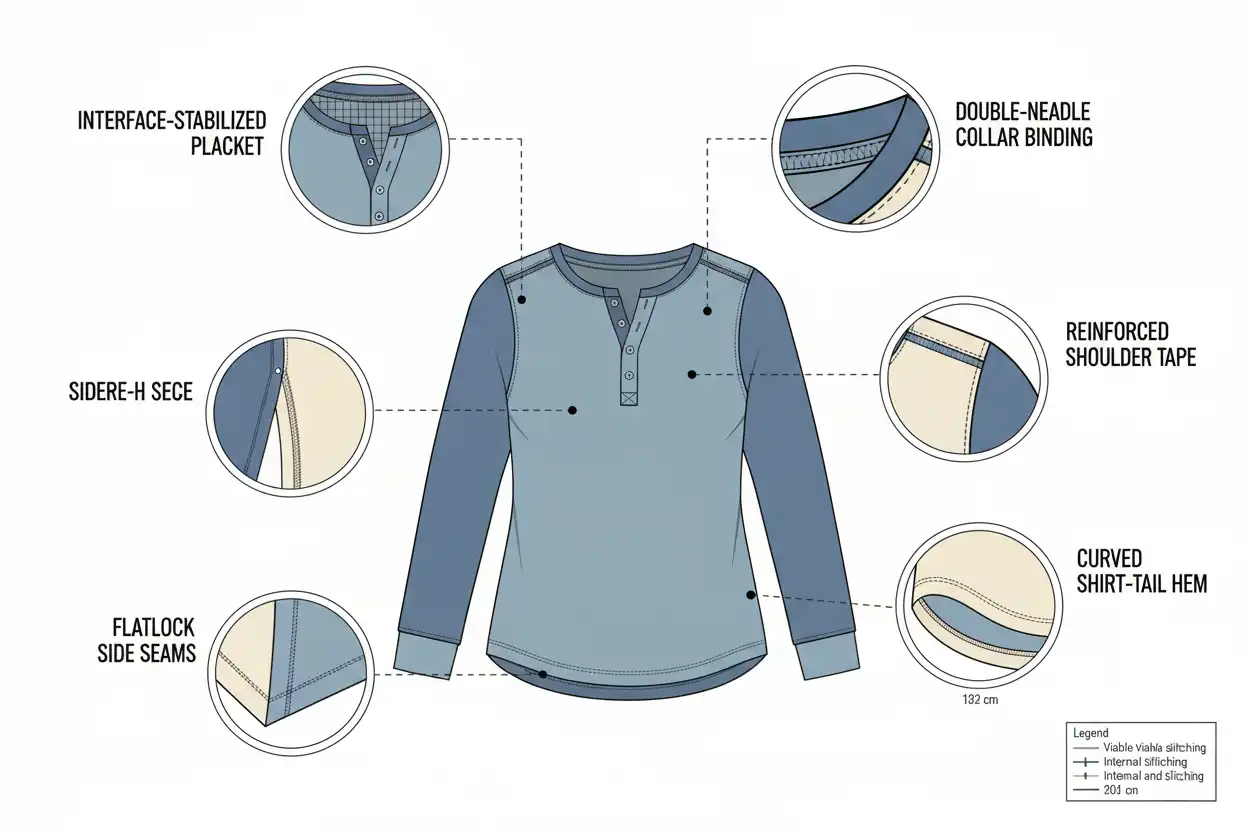
Understanding how a henley is constructed helps you identify durable, flattering garments that will not stretch out after a single wash. Premium construction lies in the details of the placket, seams, and neckline binding.
The Front Placket
The placket is the vertical fabric strip that houses the buttons and buttonholes. High-grade henleys feature an interfaced placket, which uses a thin layer of fused stabilizer fabric between the front and back placket layers.
Interfacing prevents the front of the shirt from sagging, rolling, or puckering when left unbuttoned. Placket lengths on women’s shirts generally range from three to six buttons, offering customizable coverage depending on bust size and styling preferences.
Collar Construction and Necklines
While the traditional henley features a round crewneck collar, modern women’s cuts include scoop necks, notch necks, and deep-V silhouettes. Look for collar bands finished with a double-needle coverstitch or 1×1 rib-knit binding.
Reinforced collar tape along the back of the neck prevents the neckline from expanding over time. Weak collar stitching leads to the unwanted “wavy collar” effect after laundering.
Buttons and Fasteners
The hardware on a henley defines its overall aesthetic. Metal snaps and raw horn buttons give shirts an outdoorsy, utilitarian vibe suitable for thermal waffle knits.
Mother-of-pearl, tortoiseshell, and color-matched resin buttons provide a clean, polished appearance suitable for office layering and refined casual wear. Ensure the buttonholes have tight, dense lockstitching with no loose threads.
Hemlines and Side Seams
Henleys come with three primary hem shapes: curved shirt-tail hems, split-side step hems, and straight-cut bands. Curved shirt-tail hems elongate the torso and stay tucked into high-waisted denim with ease.
Flatlock side seams reduce bulk and friction against the skin, which is essential for slim-fitting thermal base layers.
Fabric Guide: Waffle, Ribbed, and Jersey Knits
The fabric you choose dictates how the henley hangs, how warm it feels, and how it holds up to regular wear. Different fabric weaves serve distinct purposes across varying climates.
1. Thermal Waffle Knit
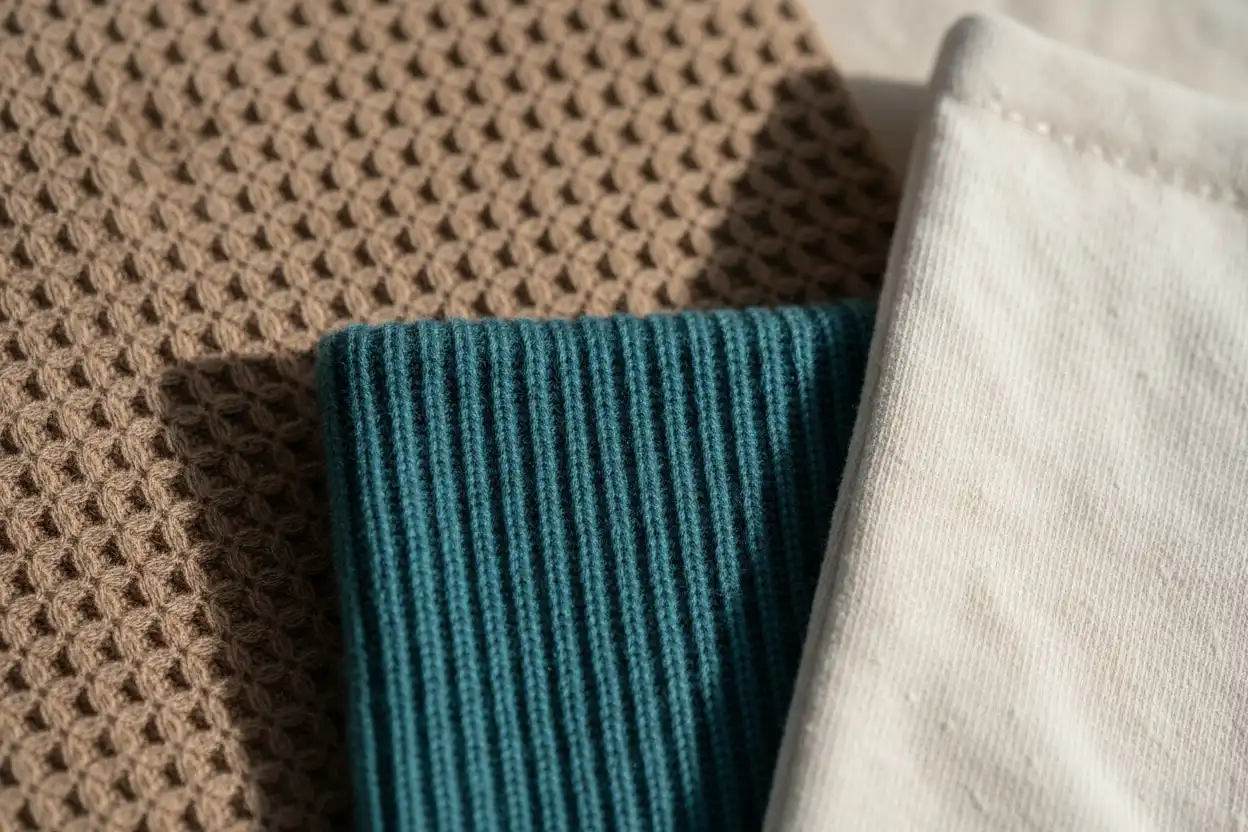
Waffle knits feature a distinct three-dimensional honeycomb texture created by raised ridges and recessed squares. These recessed pockets trap warm air against the skin while allowing moisture to escape through the thinner valley weaves.
Thermal henleys are typically made from 100% cotton or cotton-polyester blends ranging from 220 to 320 GSM (grams per square meter). They provide natural texture that adds depth beneath smooth leather jackets, denim, or heavy wool coats.
2. Micro-Ribbed and 2×2 Ribbed Knits
Ribbed knits alternate between knit and purl wales to create a naturally elastic, form-fitting fabric without requiring high percentages of synthetic elastane. They recover their shape quickly after stretching, making them ideal for slim silhouettes.
Ribbed cotton-modal blends feel silky against the skin and offer a flattering, body-skimming drape. These henleys work exceptionally well tucked into tailored trousers, midi skirts, and structured jeans.
3. Slub and Combed Cotton Jersey
Jersey is a single-knit fabric that produces a flat, smooth face with a slightly textured reverse. Combed cotton jersey offers a smooth, clean finish, while slub jersey introduces intentional, subtle yarn variations for a casual, lived-in feel.
Lightweight jersey henleys (140 to 180 GSM) are best for spring and summer wear. They drape loosely over the torso without clinging, providing effortless breathability on warm afternoons.
4. Modal, TENCEL™, and Bamboo Blends
Regenerated cellulosic fibers like modal, lyocell (TENCEL™), and bamboo viscose provide superior softness, high breathability, and fluid drape. These fabrics resist pilling better than low-grade synthetic rayons when blended with long-staple cotton.
They also retain deep dye pigments through repeated wash cycles, making them the best option for rich jewel tones and saturated black tops.
5. Merino Wool Blends
Merino wool henleys are the gold standard for travel, hiking, and active winter base layers. Natural crimp in the ultra-fine merino fibers regulates body temperature across both hot and cold environments.
Merino wool is naturally antimicrobial, meaning you can wear it multiple times between washings without developing odors. Look for blends with 10% to 20% nylon for added durability and tensile strength.
Fit Profiles: Finding the Right Silhouette
Selecting the correct silhouette depends on whether you plan to wear your henley as a standalone statement top or as an insulating base layer.

The Slim, Form-Fitting Cut
A slim-fit henley sits close to the torso and sleeves without pulling across the chest buttons. It highlights the natural waistline and eliminates excess fabric bunching when layered under sweaters, cardigans, and blazers.
Choose slim fits in ribbed cotton or modal blends with 3% to 5% spandex for flexible movement throughout the day.
The Classic Relaxed Cut
The relaxed fit falls straight down from the bust to the hip, offering roughly one to two inches of ease around the torso. It strikes a balance between tailored structure and casual comfort.
This cut is the most versatile option for everyday wear. It looks balanced whether worn loose over leggings or styled with a partial front tuck into mid-rise denim.
The Oversized / Boyfriend Cut
Boyfriend henleys feature dropped shoulder seams, wider sleeve cuffs, and an extended hemline that covers the hips. This silhouette prioritizes cozy comfort and casual style.
To avoid overwhelming smaller frames, balance an oversized top with fitted bottoms like straight-leg jeans, bike shorts, or tailored leggings.
The Cropped and Boxy Cut
Cropped henleys hit precisely at the natural waist or just above the high-hip line. They feature a wider, boxier chest measurement that creates a modern geometric silhouette.
These tops pair seamlessly with high-rise wide-leg pants, high-waisted linen shorts, and A-line skirts by visually defining your waist without requiring a tuck.
How to Style a Henley Shirt: Outfit Formulas
The henley is one of the most functional basics in modern casual wear. Here are five foolproof outfit formulas designed for different occasions.
1. Elevated Weekend Casual
Pair a long-sleeve waffle henley in oatmeal or heather gray with medium-wash straight-leg jeans. Unbutton the top two buttons and layer a delicate gold pendant necklace inside the neckline.
Complete the look with white leather sneakers, a cognac leather belt, and an unstructured trench coat or utility jacket.
2. Smart Casual Office Layering
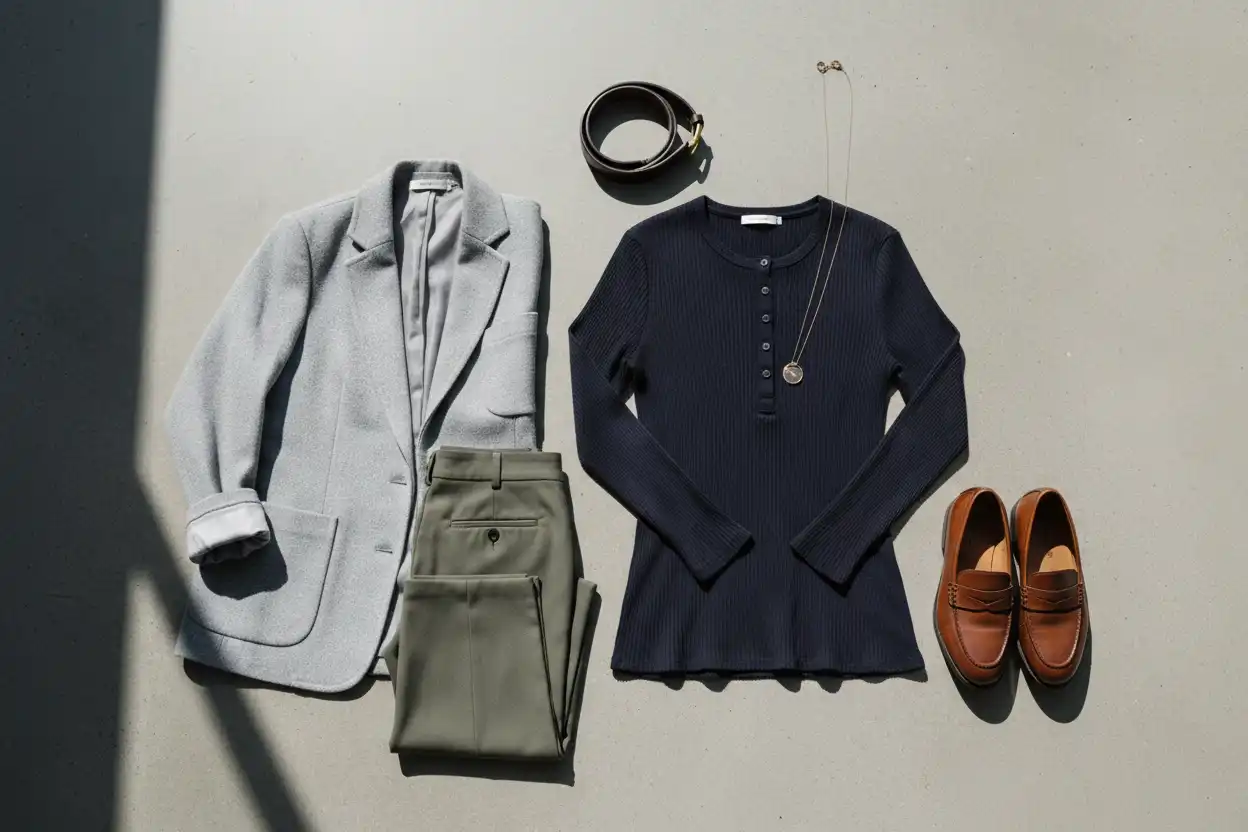
Select a fine-gauge, ribbed modal henley in black, navy, or deep burgundy. Button the placket fully for a clean, minimalist mock-collar effect.
Tuck the shirt into high-waisted pleated trousers. Add a tailored wool blazer, pointed-toe loafers, and structured leather tote bag for a sharp work ensemble.
3. The Cozy Transitional Layer
Take a relaxed-fit slub cotton henley and wear it unbuttoned over a lace-trim camisole or seamless ribbed tank. Pair it with corduroy trousers or mom jeans.
Layer a chunky knit cardigan over your shoulders and anchor the outfit with suede Chelsea boots.
4. Streetwear Edge
Wear an oversized black thermal henley half-tucked into distressed wide-leg cargo pants. Leave three buttons undone to create an open, relaxed neckline.
Add chunky platform boots, a leather moto jacket, and a structured crossbody bag to finish the look.
5. Summer Minimalist
Choose a short-sleeve or sleeveless lightweight linen-cotton henley in crisp white or soft sage green. Pair it with relaxed linen drawstring shorts or a tiered cotton midi skirt.
Finish with woven leather slide sandals, a canvas market tote, and classic tortoiseshell sunglasses.
Step-by-Step Guide: Fit-Testing and Curating Your Henley
Follow this systematic process when shopping for a henley to ensure long-term comfort, fit integrity, and styling versatility.
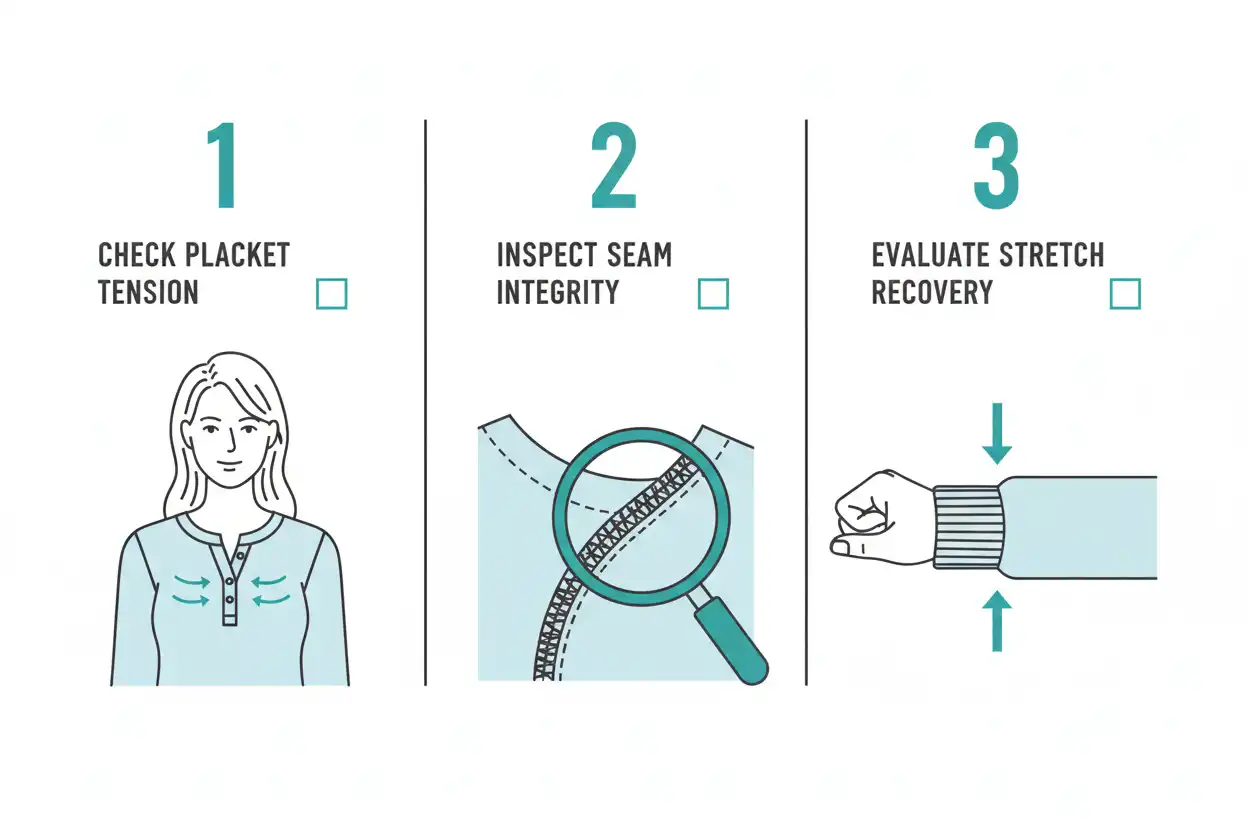
Step 1: Check Bust and Placket Tension
What: Assess the space between the buttons across the widest point of your chest.
Why: If the shirt is too tight across the bust, the placket will pull horizontally, creating visible gaps that expose undergarments.
How: Button the shirt completely and look in a mirror from a 45-degree angle. If the fabric pulls or the buttonholes stretch into ovals, size up or look for a top with closer button spacing.
Pro Tip: Look for henleys with a hidden interior modesty snap between the two middle buttons.
Step 2: Inspect Seam Construction and Interfacing
What: Examine the interior stitching around the collar, placket, and shoulders.
Why: Unreinforced seams will curl, stretch, and warp after exposure to water and detergent agitation.
How: Gently pull the placket vertically. It should feel slightly stiffer than the rest of the shirt body due to internal interfacing. Check that the shoulder seams include clear elastic stay tape inside the stitching.
Common Mistake: Buying cheap, single-layer plackets that roll outward and expose the raw interior seams when unbuttoned.
Step 3: Evaluate Fabric Recovery
What: Test how quickly the knit fabric bounces back into shape.
Why: Thermal and ribbed knits that lack recovery will bag out at the elbows, cuffs, and hem after just a few hours of wear.
How: Grab a two-inch section of the sleeve cuff, stretch it gently to double its width, hold for five seconds, and release. If it does not snap back immediately, the fabric contains low-grade yarns or insufficient elastane.
Step 4: Master the Button-Staging Technique
What: Adjust button closures to complement your neck shape and styling goals.
Why: Fastening options alter the garment’s neckline line and overall level of formality.
How: Fasten all buttons for a modest, tailored look under blazers. Leave the top two buttons open for everyday balance, or leave three buttons open over a layering tank for a relaxed evening look.
Step 5: Execute the Proper Tuck
What: Secure the hemline neatly into your bottoms.
Why: Henleys have more surface texture than plain tees; an improper tuck can create unwanted bulk around the waist.
How: For heavy waffle knits, use a French tuck (front tuck only) directly behind your belt buckle, letting the sides drape naturally. For lightweight ribbed modal tops, execute a full 360-degree tuck into high-rise pants.
Fabric Comparison Matrix
Use this comprehensive comparison table to select the right henley material based on your climate, activity level, and aesthetic preferences.
| Fabric Type | Fabric Weight | Breathability | Stretch Recovery | Best Use Case | Care Level |
|---|---|---|---|---|---|
| Cotton Thermal Waffle | Mid to Heavy (240–320 GSM) | High (Air Pockets) | Moderate | Autumn/Winter casual, outdoor layering | Low (Machine wash cold, air dry) |
| Cotton-Modal Rib Knit | Light to Mid (180–220 GSM) | High | Excellent | Smart casual, tucked office wear | Medium (Gentle cycle, flat dry) |
| Combed Cotton Jersey | Light (140–180 GSM) | Very High | Moderate | Spring/Summer everyday basic | Low (Standard machine wash) |
| 100% Merino Wool | Mid (190–250 GSM) | Exceptional | High | Hiking, travel, thermal insulation | High (Wool detergent, lay flat) |
| Linen-Cotton Blend | Light (130–160 GSM) | Maximum | Low | Warm climates, beachwear, summer layering | Medium (Line dry, steam if desired) |
Seasonal Wardrobe Transitions
The henley is a genuine year-round staple. Adapting it across seasons requires adjusting fabric weights and outer layers.
Autumn and Winter Insulation
In cold weather, thick waffle and thermal henleys act as your primary insulating base or mid-layer. The textured knit creates air buffers beneath heavy outwear like shearling jackets, down parkas, and wool overcoats.
Pair a cream thermal henley with dark denim, wool socks, and leather boots for a timeless winter outfit.
Spring Outer Layering
During transitional spring weather, a midweight henley functions perfectly as standalone outerwear. Wear it during mild mornings, and roll up the sleeves as temperatures rise in the afternoon.
Combine an olive or dusty blue henley with white denim or a tan chore jacket for an effortless spring palette.
Summer Minimalist Outfits
Short-sleeve and sleeveless henleys offer a stylish alternative to plain crewneck tees in hot weather. The functional placket allows you to open the collar for better airflow on hot days.
Look for loose-knit cotton slub or linen blends in pale neutrals that reflect sunlight and dry quickly.
Garment Care and Fabric Longevity
Proper laundering maintains the fabric elasticity, prevents collar curling, and stops thermal textures from flattening over time.
Washing Temperatures and Detergents
Always wash knit henleys in cold water (30°C / 85°F or below) on a gentle cycle. Hot water degrades elastane fibers and causes natural cotton threads to shrink unevenly along the seams.
Use a mild, pH-neutral liquid detergent. Avoid powdered detergents that leave mineral residue in waffle recesses, and never use fabric softeners on thermal or performance knits because they coat the fibers and reduce breathability.
Preventing “Bacon Collar” and Placket Warping
The term “bacon collar” describes the rippled, wavy neckline that develops on cheap or mistreated knit shirts. Prevent this issue by fastening all buttons before placing the shirt in the washing machine.
Placing your henley inside a mesh laundry bag protects the buttons and placket from twisting around other clothing in the wash drum.
Drying Techniques
Never machine-dry knit henleys on high heat. Tumble drying causes thermal waffle weaves to contract dramatically and causes ribbed fabrics to lose their elastic memory.
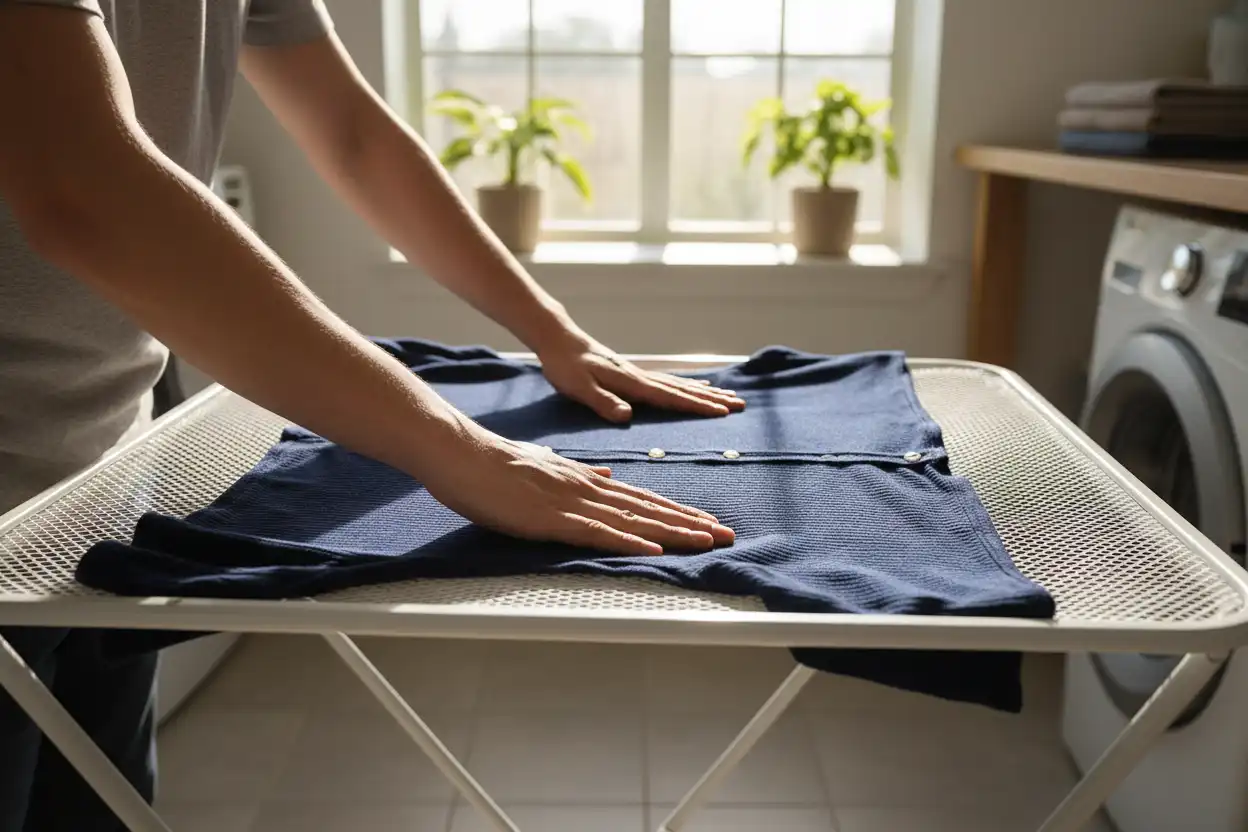
Gently reshape the shirt while damp, paying close attention to smoothing out the front placket with your fingers. Lay the garment flat on a clean towel or mesh drying rack away from direct sunlight.
Storage: Folding vs. Hanging
Always fold your henley shirts and store them flat in a drawer or on a shelf. Hanging a wet or heavy knit shirt stretches out the shoulder seams, creating unsightly “hanger bumps” along the collar line.
Expert Tips for Advanced Layering
Take your styling further with these professional techniques.
- Play with Underlayer Necklines: Layer a crewneck henley unbuttoned over a lace bralette or high-neck silk camisole. This creates an appealing mix of utilitarian cotton and delicate textures.
- Sleeve Push-Back Architecture: When rolling or pushing up long sleeves on waffle tops, fold the cuff back once onto itself, then slide the sleeve up to just below the elbow. The folded cuff locks the sleeve in place without cutting off circulation.
- Monochromatic Layering: Pair a charcoal grey henley with a slate grey wool cardigan and dark grey tailored trousers. Mixing different textures within the same color family creates a rich, cohesive look.
- Hardware Matching: Coordinate your jewelry with the shirt’s hardware. Pair silver chains and hoop earrings with nickel or pewter snap closures, and wear gold jewelry with warm tortoiseshell, horn, or bronze buttons.
Common Mistakes to Avoid
Watch out for these common fit and styling errors when shopping for and wearing women’s henley shirts.
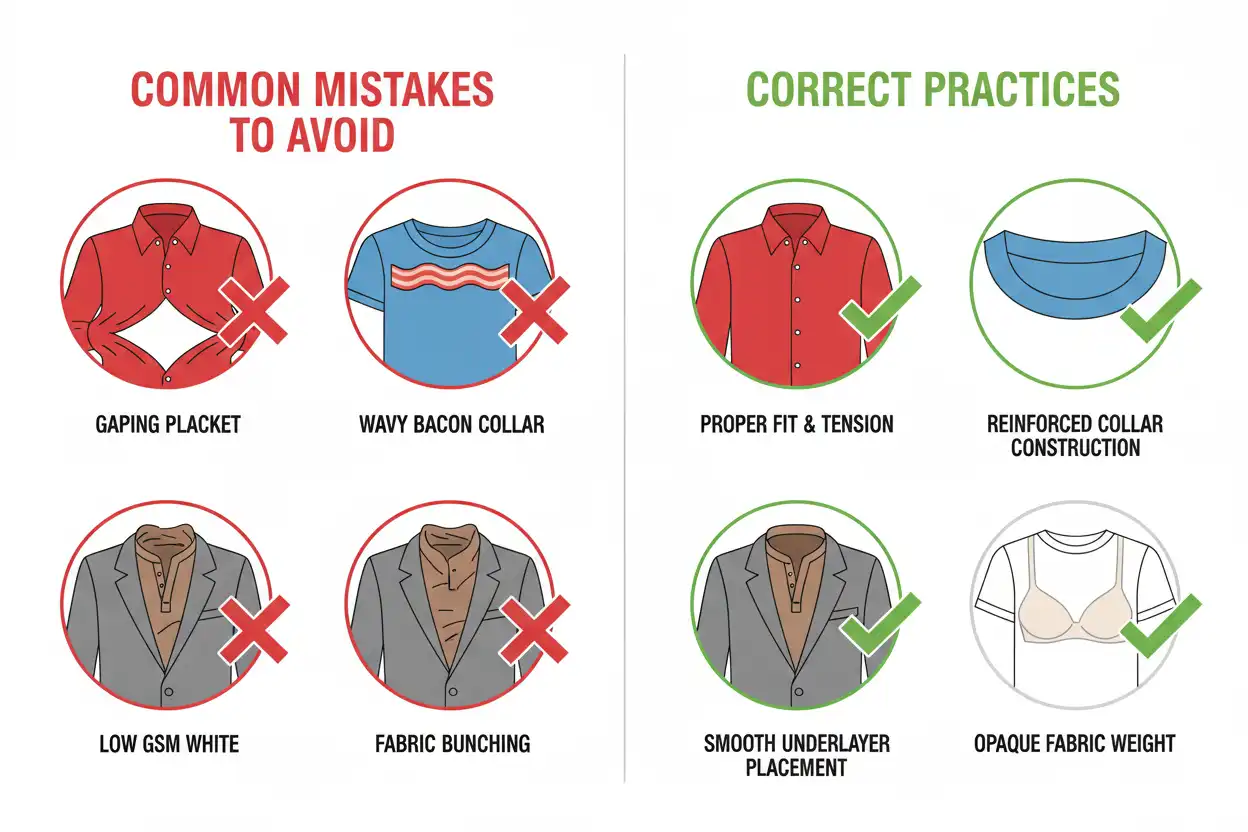
- Ignoring the Placket Gap: Buying a fitted henley without checking the horizontal tension across the bust. If the buttons strain to stay closed, size up and have the waist tailored if needed.
- Over-Smoothing the Fabric: Ironing a waffle thermal top flat. Steaming or heavy ironing destroys the 3D honeycomb weave, removing the natural texture that makes the garment unique.
- Layering Stiff Collars Over the Henley: Pairing a thick, high-buttoned henley underneath a stiff, button-down collared shirt. This causes fabric to bunch around the throat. Instead, pair henleys under collarless jackets, chore coats, or open cardigans.
- Selecting Low-GSM White Knits: Buying ultra-sheer white henleys that reveal undergarment seams. Look for white tops with a minimum weight of 180 GSM, or wear seamless skin-tone undergarments beneath lighter weights.
Capsule Wardrobe Best Practices
To build a versatile capsule wardrobe around the henley shirt, curate three distinct styles that cover every season and styling scenario.
- The Core Casual Thermal: One long-sleeve waffle knit in a versatile neutral (oatmeal, cream, or heather gray) for winter layering and relaxed weekends.
- The Elevated Slim Ribbed Top: One fitted, micro-ribbed modal-cotton henley in black or rich navy for office layering and evening outfits.
- The Warm-Weather Base: One short-sleeve or sleeveless combed cotton/slub jersey henley in crisp white or olive green for spring and summer wear.
These three core tops cover casual lounging, smart-casual workplaces, and warm-weather vacations with minimal fuss.
Tools and Resources
Utilize these practical resources to maintain your wardrobe and find the right garment specifications.
- Fabric Weight Scale (GSM Calculator): Use an online GSM calculator when shopping online to determine whether a garment is lightweight (under 160 GSM), midweight (160–220 GSM), or heavyweight (240+ GSM).
- Mesh Laundry Garment Bags: Essential accessories that prevent buttons from tearing off and necklines from stretching in the wash.
- Handheld Garment Steamer: The preferred tool for smoothing knit garments without flattening their natural surface texture.
Internal Linking Suggestions
Integrate this comprehensive guide with other related topics on your website:
- How to Build a Minimalist Capsule Wardrobe for Fall (Anchor: “minimalist capsule wardrobe basics”)
- Waffle Knit vs. Thermal: Fabric Differences Explained (Anchor: “waffle knit fabric guide”)
- The Complete Guide to Women’s Shirt Necklines (Anchor: “different women’s shirt necklines”)
- How to Style Wide-Leg Trousers for Work and Casual Wear (Anchor: “styling tops with wide-leg trousers”)
- The Ultimate Fabric Care Guide: How to Wash Knits and Delicates (Anchor: “washing and caring for knitwear”)
External Authority References
To learn more about textile standards and garment care, explore these trusted educational and industry resources:
- Federal Trade Commission (FTC) Textile Fiber Products Identification: Official guidelines on textile labeling, fiber contents, and fabric care instructions.
- Textile Exchange Standards: Leading global non-profit providing transparency on organic cotton, recycled fibers, and responsible wool standards.
- Henley-on-Thames Royal Regatta History Archives: Educational historical archives detailing the origins of traditional rowing sports apparel.
Key Takeaways
- A women’s henley shirt is defined by its collarless neckline and functional 2-to-6 button front placket.
- Choose waffle thermal knits for warm, casual winter layering, and ribbed modal blends for sleek, smart-casual office outfits.
- Always check for interfacing in the placket to prevent the front collar from sagging or curling outward.
- Wash your henleys in cold water with the buttons fastened, and lay them flat to dry to maintain their shape and prevent stretching.
- Balance outfit proportions by pairing fitted henleys with wide trousers and oversized boyfriend henleys with slim-fitting bottoms.
Final Thoughts
The women’s henley shirt remains a beloved classic because it effortlessly combines comfort, texture, and visual interest. By choosing quality fabrics, checking the placket construction, and applying versatile styling techniques, you can wear this functional basic across every season.
Experiment with different button configurations and fabric textures to find the combination that best complements your personal style.
Frequently Asked Questions
What makes a shirt a henley?
A henley is a collarless pullover shirt defined by a front placket with two to six buttons. Unlike standard crewneck t-shirts or polo shirts with folded collars, the henley offers an adjustable round or scoop neckline that can be worn buttoned or open for ventilation and layering.
How should a women’s henley shirt fit?
A women’s henley should fit comfortably across the shoulders and bust without the placket buttons pulling apart. Slim-fitting styles should hug the torso smoothly without excess tightness, while relaxed cuts should offer one to two inches of room through the waist and hips for comfortable movement.
Are henley shirts in style for women?
Yes, henleys remain a timeless basic in women’s fashion. They are widely used in minimalist capsule wardrobes, casual streetwear, and modern layering outfits because their button placket adds more visual texture and depth than a plain t-shirt.
Can you wear a henley shirt to the office?
You can wear a henley in business casual workplaces by selecting a fine-gauge, ribbed modal or silk-cotton blend in dark, neutral tones. Fasten the buttons fully, tuck the shirt into high-waisted tailored trousers, and layer a structured blazer over top.
What is the difference between a thermal shirt and a henley?
A thermal shirt refers specifically to the knit construction—such as a 3D waffle or honeycomb weave designed for heat retention. A henley refers strictly to the collarless button-placket silhouette. While many winter henleys are made from thermal fabric, henleys are also made from lightweight jersey, linen, and ribbed modal.
How do you prevent a henley placket from gaping at the bust?
To avoid placket gaping, choose shirts with reinforced interior interfacing, select tops with closely spaced buttons, or size up for a relaxed fit across the chest. You can also add an interior hook-and-eye fastener or invisible snap between the buttons at the apex of the bust.
Should you leave a henley buttoned or unbuttoned?
How you button your henley depends on the occasion. Leaving the top one or two buttons open creates a relaxed, flattering V-neck shape for casual outfits. Fastening all buttons provides a structured, modern look suitable for office wear and layered blazers.
How do you keep henley shirts from shrinking?
Wash your henleys in cold water on a gentle cycle, using mild detergent and avoiding hot water settings. Avoid machine drying; instead, reshape the damp garment with your hands and lay it flat to dry on a towel or drying rack.